You open your mailbox and find a letter threatening you’ll be sued for a $100,000 due to copyrights infringement.

“Impossible! That will never happen to me!” you say?
Well, do yourself a big favor and read this post.
Recent statistics show that over 85% of the photos used online are subject of copyright infringement.
Are you sure you’re not a thief?
Shortly after I decided to start this blog, I had a talk with a friend – Mirelle.
Mirelle is the proud owner of a well-known Israeli blog, focusing fashion, makeup & accessories: The Falafel Fashion blog.
Mirelle shared some horror stories she heard from her colleagues. All stories sounded pretty much the same:
“One day, out of the blue, I got a warning letter from Gettty Images, ordering me to compensate some unheard-of photographer with tens of thousands of dollars.” The letter also said that if no action will be taken promptly, that blogger will be sued in court of law for copyright infringement!
Sounds familiar? Rings a bell? The blogosphere has been buzzing with alike stories for a quite a while.
Joe McCall from St. Louis, Missouri told his personal story on a forum message, titled “Getty Images Suing Me for $4,000!!!“:
“I received a letter from Getty Images today telling me to cease & desist using 4 images immediately… I have to send them $4,000 after I delete the images for copyright infringement. If I don’t pay them within 14 days, they are threatening to pursue damages.”
(Joe McCall, Flipping Homes forum)
Yikes! Another post, titled “Getty Images is after me” tells a similar story:
“Several months ago somebody made me a website and used several images he claimed he got from a public domain site. Last month I got a letter from Getty Images demanding $1000 for the use of the picture”
SydneyJen (user at Site Point)
I have tens of similar stories in my “research” folder, and the internet is literally packed with tens of thousands (if not more) of these abysmal experiences. Try googling “Getty images letter”. You will find over 34,000 exact match results, and over 9.5 million (read aloud: nine-point five million) relevant results.
So, who are these poor, poor people who Getty is apparently after, and are you one of them?
- Blog owners
- Site owners
- Forum users
- Forum owners
- Web designers
- Web developers
- Graphic designers
- Newspaper companies
- Plumbers
- Realtors
- Carpenters
- Charity organizations
- Environmental organizations
- Church reverend
- and the list goes on…
Yes, you read it right. Getty Images actually filed a lawsuit against a church from Lichfield, United Kingdom for £6,000, according to The Guardian. They seem to stop nowhere.
If you are reading this post, you probably fit one or more of these categories. You must be somewhat troubled by now: Are you the next one in line?
In order to understand why are the bad guys at ‘Getty Images’ suing and bullying what seems to be everyone, everywhere; and to learn how to avoid being sued yourself, we should first answer two important questions:
- Who the hell are Getty Images anyway?
- What to they want from me or your?
WHO ARE GETTY IMAGES?
Here is (some of) what Wikipedia tells us about Getty Images Inc.:
“Getty Images, Inc. is a stock photo agency, … It is a supplier of stock images for business and consumers with an archive of 80 million still images… In February 2008 it was…acquired by Hellman & Friedman in a transaction valued at an estimated US$2.4 billion”
(From Wikipedia: Getty Images)
So, there you go. Getty Images license usage rights for over 80 million still images.
If that doesn’t make them sound really, really big, then being previously purchased for an estimated $2,400,000,000 should do the job.
Getty Images are one of the biggest stock photo agencies on planet earth, if not the biggest one. Yes, they are aggressive sometimes, but so are all huge corporations.
Hell, I LOVE Apple, but I wouldn’t want to be in the shoes of those sued by them.
Still, there seem to be far more innocent bloggers being sued for (allegedly) no apparent reason by Getty Images, than by Apple, Google, Microsoft, IBM and any other business empire combined.

Being raised on ‘Robin Hood’ fairy-tails, I decided to give Getty’s representatives a call, and ask them what are they up to. I was forwarded to their master delegate for my region: ‘Image Bank Israel‘.
A Coin Has Two Faces
I wrote an email to ‘Image Bank Israel’ that evening, pretty much in the lines of:
“I’m a newbie blogger writing a blog post on how to legally find and use photos on my blog without getting sued by you”.
The next morning (!), I got a phone call from Ms. Aviva Weinman, CEO and owner of ‘Image Bank Israel’ herself.
We met a few days later at her office in Tel Aviv. As I entered, I saw smiling faces everywhere. I didn’t even have to sit down and wait, I was buzzed right in. “They don’t seem half as bad as people bad mouth them”– I thought.
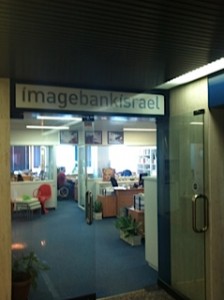
The interview turned out to be a very friendly and open conversation. We discussed photography copyright infringement at start, but later we got talking about the moral state of the Israeli society in general, and more.
But do not worry: I’m only sharing the “photo rights stuff” with you! 🙂
First, Aviva points out that ‘Image Bank Israel’ are merely Getty’s delegates in the region. This means she has no responsibility for Getty’s actions overseas, hence she can’t explain Getty’s actions, but only Image Bank’s. Nevertheless, the information she provides from an insider perspective is invaluable.
I told Aviva that I’ve decided to write this post because there are so many people obviously doing it wrong, so many people confused, and mainly so many people are scared, perhaps terrified by the name of you-know-who (Getty of course!)
“There really is no reason for confusion”, says Aviva. “The law is simple and the rules are very straight forward. Either you took a picture – and then it belongs to you, or you didn’t take the picture – and then you must obtain rights in order to use it.”
“If you use a photo that wasn’t taken by you, and you don’t bother with licensing it”, clarifies Aviva – “you are performing copyright infringement”. And that is all there is to it.
Copyright infringement is an offense
“Copyright infringement is an offense”, states Aviva. “Just like stealing a car or robbing a supermarket”.
“People don’t see it this way”, she explains, “because it’s so easy and ‘innocent’ to right-click a photo you found on Google and hit the ‘save as…’ button. But that photo was taken by someone, perhaps making his living from licensing his photos”.
PicScout’s CEO claimed that 85% of photo usage online in 2010 was done without appropriate licensing, I tell her. She doesn’t seem surprised.
“That’s why Getty Images, and their delegates overseas, are taking action. Some people don’t even understand that they are stealing something that belongs to someone else. Others just don’t care.”
Porsches aren’t that cheap!
OK, but let’s face it, I say. Buying licenses from Getty, iStockPhotos, or others can cost quite a lot of money. For an amateur blogger or a newbie writer, the price can be overwhelming.
Aviva has a great comeback (and marvelous analogy): “That’s true. But buying a Porsche isn’t cheap also. Still people know they cannot just take one that is parked at the parking lot. Even if the door is open and the key is in the ignition switch, most people will know better than taking the car for a spin!”
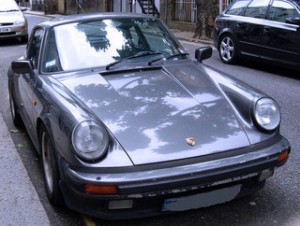
To this interesting analogy, she adds: “Remember that even if you steal a car, and then return it a week later to the exact same spot, it still doesn’t correct your wrongful act. Gasoline was wasted, wear and tear occurred…That’s why sometimes we can not settle for a cease and decease act (when one removes and stops any usage of non licensed copyrighted material [MB])”.
Judgement: When to settle
Unlike the (justified or not) image of Getty (pun intended), at least at their Israeli delegate I hear some sound judgement as to deciding when to file a lawsuit vs. when to settle:
“We understand that not all are born equal. We don’t want to make anyone lose his home or leave his family with nothing. But people still need to take responsibility for their actions”.
“People need to understand that we only manage the rights of the photos for our photographers. We don’t own the photos themselves. So, if a photographer is reluctant to settle or no compromise can be reached, we sue for the whole worth.”
Sure, I say. But to be honest, some of the prices I’m hearing sound crazy! How does one reach such high figures??
“First, at least the Israeli law defines a ‘default’ penalty per picture that was used against terms. This is the same in most countries, and usually serves as the starting point. If we go to court, the photographer can sue for the entire value of the photo, determined by much money he could make of licensing it over a period of ten years.”
“And yes,”, she adds, “It can be a very high figure when dealing with professional photographers”.

“In case of severe infringement for commercial benefit, and after having our letters ignored again and again, we could sue. If someone makes as spend on lawyers, private investigators, requires the work of the Getty legal department and an entire team of people in Israel and around the world – they will pay the price.”
“But we try to settle as much as possible with smaller business owners/bloggers. Many times we end up with a simple act of cease and decease and an apology. Other times we settled for the blogger buying the license at market price. Hundreds of them become longtime returning customers afterwards.”
It’s worth pointing out that this is only the policy of ‘Image Bank Israel’, and doesn’t necessarily say anything about Getty Images behavior (which does seem to be more radical!). Nonetheless, play by the rules and they’ll have no claims either.
If you’re willing to settle, I ask Aviva, why are you demanding so much money in the initial warning letter, instead of offering alternative options?
“As sad as it may seem”, Aviva answers, “No one reads nice letters anymore. Only when we threaten, we get people to take action and talk to us”.
So, I say and pause. Hypothetically speaking, lets pretend I’m a blogger with a bunch of unlicensed photos on my blog. What should I do to avoid being sued due to my already committed offenses?
“At the very least,” she smiles, “you should license all of the photos appropriately, and pay the photographer his dues.”

Time Traveling for evidence
This raises a question, debated outside Image Bank Israel offices, by many bloggers and so-called experts:
Should you pay, or should you remove the unlicensed photos and call it a day?
Well, here come some bad news for you, folks: Maybe Albert Einstein proved time traveling to be impossible in the real world, but on the internet, time traveling has been around for years.
Time traveling can be done via time machines (well, duh…). Time machine websites let anyone go back in time and see past versions of your website, sometimes dating years and years back. That’s long before you removed the subject of infringement off your site!
And yes, you guessed it right. Getty Images and their automatic robots use such archives to find & prove infringements. (Wanna check out the most popular internet archive? Visit the Wayback Machine)
Now, you could contact the support teams of these websites, and kindly ask them to remove your website from their archives. Some of them even went public about their objection to Getty using their services (‘Wayback Machine’ for instance), and they will be happy to help you out.
But who knows what private archives are in use today, or will exist tomorrow? Could you ever be sure you have destroyed all evidence?
Back to Aviva’s office, she tells me: “We give heavy weight in handling the case to the behavior pattern we see. If someone acts like he has something to hide – if he starts hiding evidence, deleting pages and generally behaves like a thief that’s aware to the severity of his actions, then it is not an innocent mistake.”
“We understand that people can make innocent mistakes. Sometimes it’s the web designer’s fault, and he’s already out of the business by the time we reach the website owner. But sometimes it’s as clear as the sun that someone has been doing it knowingly for ages, and those people need to pay for their actions”.
So yes, you could try to destroy the evidences. It’s hard to estimate your chances of succeeding, and it might make the matter worse if you are caught. Take that into account, and perhaps consider avoiding copyrights infringement to begin with!
The risk
But there are so many photos and graphics in the free domain! I tell Aviva.
Sure, it’s Image Bank & Getty Images job to make as much ca$h possible for the photographers, but why shouldn’t I use photos from the public domain?
Aviva tells me a story. “One day, I open the weekend newspaper. One of the full-page ads caught my eye. It was by a professional photographer, offering his services for weddings, birthdays, etc. He had 4 samples of his photos at the bottom of the ad. I immediately recognized those photos – they came from my image bank! That photographer stole four photos of other photographers, and claimed on national newspaper that they are a sample of his own work”.
The lesson? If someone can publish an ad on national newspaper with stolen photos, someone can sure-as-hell upload stolen photos to his Flickr, Instagram or Facebook accounts, and even upload them to open “public domain” (AKA ‘free’) web galleries.
If you, or your designer, happen to download and use a photo from a public domain website, that was uploaded without the photographer’s knowledge – you are performing an infringement as if you stole the photo yourself.
So, that makes a compelling reason why you should use Getty, Image Bank, Dreamstime or any similar licensing agency (or even contact the photographer directly, if he doesn’t manage his rights through such agency). This way, you know for sure that you are doing everything right to a tee.
There are alternatives of course, but as stated above, they do come with some risk.
The main alternative is using photos licensed under ‘open licenses’, such as the Creative Commons (abbreviated as CC). Flickr has a library of over 210 million photos that can be used for free under the CC licenses.
My next post is going to be dedicated to show you how to find and legally use photos from Flickr on your blog. If you want to get an email notification when it’s out, why not subscribe to the mailing list?
tips and lessons
The most important lessons to learn from this blog post, in addition to the understanding of why you can’t just copy-paste any image you see online, are:
1. Make sure you attain rights before using the material
How can you obtain rights for photos you did not shoot yourself?
- If the photographer is employed by you, you get some rights – depending on your signed agreement. If you expect all rights and ownership of the photos to belong to you once you pay the photographer, you must put that in your written agreement. If you don’t sign a contract, it is generally considered that you have a one-time license to use the photos for the exact purpose described in the job order, and nothing more (this is not legal advice!).
- The same goes for website designs – they belong to the designer unless stated otherwise!
- If the photo is licensed under some “open” license, such as the Creative Commons (also referred to as CC), you may use it for free as long as you are keeping the usage to the exact license terms.
- If the license is managed be some agency, the process generally follows this path: A. You buy “credits”, averaging at $1.5 per credit point. B. You choose the required photo and choose appropriate license, image size, and allowed usage. This is usually handled by the purchase wizard at the agency website. The wizard will tell you how many credits are required to license your needs.
- Are you a student or part of an educational institution? Do you need the photo for private or educational use only? ‘Image Bank Israel’ and many other agencies will not only allow you to use photos for free, but will happily give you high-resolution versions of the photos upon request.
2. Protect yourself
Are you buying a design for your website or blog from some gallery or web designer? Is someone designing some brochures for you? Your order should include a contract forcing them to only use licensed works, and have them to take legal responsibility if they fail to do so.

This advice is common sense, but you should have a lawyer help you with a template agreement of such kind. When doing so, do make sure he specializes in copyright infringements and not transportation and car accidents!
One more point to remember: There is no such thing as a free lunch! Not all photos licensed under Creative Commons on Flickr actually belong to the user that uploaded them. Use common sense. If it looks too good to be true, it probably is.
3. License types
As already mentioned, ‘open licenses’ exist (like CC), allowing you to use a photo for no money down. Besides those, if you decide to pay for licensing you will generally find terms similar to the following:
- Royalty Free (RF) License
- Usually refers to a non-transferable, non-exclusive right to use a photo for specified needs.
- It is usually less restrictive in terms of allowed usage and limitations than more ‘complicated’ licenses, but it varies by the websites and agencies, so read their terms before purchasing.
- Many websites offer Basic RF and Extended RF licenses, so make sure you compare them before you buy.
- Don’t forget – RF license is non-exclusive, so there is a good chance someone else will be using the same photos.
- Normal limitations include: size, market, format (web, printed, etc), maximum allowed exposure, and more.
- At Getty Images, RF license price is based solely on the size of the purchased photo.
- Rights Managed (RM) License
- An exclusive right to use a photo.
- Usually is limited by time, region of the world (e.g. ‘China only’, ‘Latin America’ or even ‘Worldwide’), and usage (e.g. Editorial, software design, website design, printed materials, etc.).
- As it is an exclusive right to use the photo, it generally costs much more in comparison to RF or CC licensed photos.
- Editorial Rights
- This is a sub case of RM License, where the photo may only be used for editorial purposes (newspapers, news sites, blogs following current events, etc.) referencing information, news or noteworthy event.
- At almost all cases, the license is non-exclusive and for one-time use only.
- Preview License
- Intended for personal, educational and noncommercial use only. Some limitations may apply.
4. Finding Photos
As I mentioned, I’m in process of writing a blog post showing where to find photos for your blog and how to use them legally, including the process of purchase and download (both open licenses and RF websites).
Here is a small taste from the coming post, showing how to find photos under CC licenses on Flickr:
http://youtu.be/xXTfuyOrSgE
You can find photos under RF or RM licenses at:
- Getty Images (Obviously..). Curated by Getty editors.
- Corbis Images – Owned by Bill Gates. Over 100 million images. Never used them, but prices seem good, and they also accept local currency.
- Dreams Time – A cheap choice for stock photos.
- iStock Photo (Owned by Getty Images) – Same like Getty, but the photos are uploaded by the photographers themselves, and not by Getty. Cheapest RF photo I found there went for ~15 credits, which averages at $22.
- Shutter Stock (I Didn’t try it yet, but will during my next blog post writing).
I’m going to review all these websites and show you the exact purchase process on my next post. If you want to receive an email notification when it’s published, subscribe to my mailing list right now. You will receive blog posts only, and nothing else. You can un-subscribe at any time of course.
Until the next time,
Meron
There are 2 problems here – one is the whole “Right Click” problem – by making it easy to download / steal images millions will do so.
Part of that is down to Google and part is down to browser design.
Then there’s deception. I know of one highly ethical Internet marketer who got one of these letters from Getty. Puzzled because he had a licence to use the image from the Designer who did some work for him he looked into the problem. Turns out that the images had been ripped off by the designer who had also faked the licence.
The designer, of course, could not be found and the cost…£1,000.
As for people uploading to Flickr images for which they do not have the right to do so….Ugh, scary, so now we can’t even trust creative commons?
And I honestly love iStockphoto but the prices are too high for me to use more than a handful.
The solution…use more of your own photos alongside the free images you can find online at sxc.hu amongst others.
Thanks for bringing this very important topic up – the level of awareness of these issues is low and this will be very helpful. And well done for doing the interview!
🙂
Alex
Hi Alex, thanks for the kind words!
You are spot-on about Google. I believe they should have added a “for private/educational use only” disclaimer (or something similar) to their image search results page years ago.
I think that a “save image as…-for private use only-” link in browsers (instead of the current text), would have served the purpose much better too, but wouldn’t have looked as nice 😉
The designer story gave me a rush of blood to the head :rage:! Do you have any idea if he paid Getty at the end? Did he have any contract signed with that designer? This kind of stuff is what scares the hell out of me when I see the very cheap prices for such jobs on Elance or Fiverr.
I heard about sxc.hu but never used it – and have the same concerns like I have about photos from the Creative Commons collection (although I do rely on them). If you (or anyone else reading) could share your experience with sxc or any other site not mentioned – I’d love that! I’ve seen the site before, and it has some nice selection, but are there any guarantees for the origins of photos there?
By the way, I found Getty to be sometimes cheaper than iStockPhoto ($10 vs. $22-25).
Thanks again for commenting, and I agree with your lesson – Use as many photos of your own as you possibly can! 🙂
Take care
Meron
Getty owns BOTH sxc.hu and iStockPhoto
I am a stock illustrator/photographer. I get cents per image sold on these image banks corporation. Ever since google and the “right click issue”, my commisions have dropped from about $400/month to about half. I use this income to pay my electrical bill, food, and so on. On some of these image banks, my royalties are around 20% of what the images sell for. Every time I surf the web I see pictures that have been stolen from the image banks by bloggers, private individuals, even businesses. How am I supposed to make a living if everyone is stealing my work?
We have just started offering a new service to allow people to send a quick response letter to Getty. Please tell your friends and other business owners about it:
http://bit.ly/GettyLetter
thanks-
Chris
Did anyone try the link above?
thanks for the article. it really helped me a lot.
Hey! Someone in my Facebook group shared this website with
us so I came to look it over. I’m definitely loving the information. I’m book-marking and will be tweeting this to my followers! Superb blog and terrific design.
Thanks ! 🙂
Thanks for a great article.
Unfortunately, Getty Images is very aggressive and unbending. Even when there is a clear path of deceit, I have read they insist on charging people that have been misled into thinking they have bought rights.
I thought Getty was/is owned by Bill Gates? I know they merged with or bought Jupiter Images who bought Hemera (they were fantastic to deal with).
I always check for specific uses with the companies I deal with if the intended use is not specified in their Terms.
The companies, including Clipart.com (owned by Getty), seem to appreciate the checking.
But, I bet I don’t get credit for this if somehow I end up using an image which they watch for.
Hi John, thanks for joining the conversation (and on two posts! 🙂 )
Bill Gates owns Corbis Images, that manage rights of just about ~100 mil photos and 500,000 video clips (and I’m ashamed to point out that I forgot to link them on the post!)
I didn’t get to talk with anyone from Getty Images themselves (only their master delegate of my region), but I agree that there seem to be many, many people complaining about such aggressiveness, and if any Getty Images rep is reading this – I’d love to hear your side of the story, esp. in cases as described by you John!
Thanks again for commenting, hope to see you soon
Meron
By the way, you mentioned that dealing with Hemera was fantastic.
Was it about clarifying license questions, or on cases of deceit like you mentioned?
Image Bank Israel seems to have what Getty Images is sincerely missing: common sense. From everything that I have seen about the “Getty Images (Extortion) Letter” is that Getty = greed. They do not accept any apology, never resort to a “of cease and desist and an apology”; they always send the very nasty, threatening letter and say “it’s YOUR problem”. I concur that unauthorized use in the “right-click any image on the webs” category is a major problem, and should be addressed, but Getty Images is making the bulk of their money with these threatening letters and it is not in their financial interest to be reasonable.
I know of a few examples where people did not know/could not have avoided the copyright infringement, but the “it is YOUR problem, give-me-my-money” approach of Getty Images (which also owns iStockphoto and scx.hu) was as flexible as a metal rod.
Another major problem is the fact that you need a legal degree to read the licensing agreement. For many uses it is very clear (or at least, you think so) but as life is made of millions shades of gray there is a very good chance that your particular situation isn’t spelled out in that agreement. If you realize that, you could ask their licensing department I guess, but the problem is that you often assume that certain a situation applies to your situation, but in reality they doesn’t. Ever watched a legal TV show? Legal lingo is never clear.
The legal system was developed to protect people; but the American system of “I hurt my toe, let’s see if I can sue someone for it to make a few bucks” has totally corrupted the system. And Getty’s approach is a result of “(ab)using the law to make (lots of) money” line of thought.
What Getty Images SHOULD do:
1. Have a clearer licensing agreement so people actually know what they need to do
2. A degree of “reasonable doubt”, which can lead to a of cease and desist and an apology. Some common sense!!!
If Getty would apply these, then maybe they would get my business back…
(yes, I received such a letter as well – in a situation which deserved a cease and desist letter rather than a hefty fine)
(yes, I stopped using istockphoto and scx.hu after this)
Hey John, thanks for sharing your story and thoughts!
Wow, what a major issue have you have pointed out – The licensing agreement!
I totally agree that licenses (not only on Getty) can be very, very hard to understand. I myself gave up on several photos because I couldn’t understand if I can use the photo for my specific need or not, and wasn’t going to “take my chances”. The Creative Commons aim at fixing this, by creating a clear “human readable summary” of the legal code that is attached to each license. I agree with you that all agencies should do the same, the earlier the better! Same goes for common sense – on all aspects of life of course.
Would you be willing to share your story? What happened and how did it end?
Who do you use now for your business needs? Any recommendations to share?
Thanks again for commenting, waiting for your reply!
Meron
Hi Meron,
The situation was that we had to publish a picture by a third party. So I mentioned that, and asked them to chase that third party instead of me. Fat chance – “your problem”!
After going back and forth (and extending the deadline for payment) that third party did pay Getty Images a reduced fee. Yes, you can ask for a reduction and they will often oblige!
It may also be good to know that Getty Images does not seem to have legal grounds to actually sue you, but they will hand over their claim to a very aggressive collection agency who can harass you for months to come.
Big bullying tactics.
For my business needs I usually rely on Dreamstime now, as they allow you to assign pictures to clients’ projects. Weird enough only for their paid pictures; for free pictures you still need to open up another account in their name. This is one of the common sense areas: many, many pictures will be bought by developers on behalf of their clients. Yet, if the pictures were downloaded using the developer’s account then they are licensed to the developer – not the client. So: the client can still receive a threatening letter with mega claim from Getty as the license is not in their name. Talking about legal technicalities with major implications! Still: to me this all feels like intentional loopholes to make an incredible amount of money off of hardworking individuals (hence my plea for the cease and desist for honest offenders – I am not talking about those right-click-offenders here).
I don’t think that anybody paying for stockphotos should receive those letters just because of misinterpretation; if only Getty was that forgiving…
I am also looking into Public Domain pictures, both from Wikipedia/Government agencies and individual photographers.
Other promising candidates include rgbstock.com (apparently started by disgruntled former scx.hu people), morguefile.com and sunipix.com.
Hi John,
At least your 3rd party could be found and did pay at the end… :/
When ordering on Getty’s website today you are actually able to specify if you are licensing for yourself or to name a customer instead (the invoice will later show 1. who ordered and 2. who’s the client) – sounds much like what you described on Dreamstime (actually the first agency I ever used!)
If you find public domain photos useful, you might like the Flickr Commons collection (not Creative Commons, just Commons), which is a collection of photos with “no known copyright restrictions“, from libraries an institutes from all around the world. You can search the commons at http://www.flickr.com/commons/. I didn’t yet give it a real try.
Thanks again for recommending all these alternatives. morguefile seems to be down right now, but I’ll be sure to check it and RGBstock out before completing my review post – which I hope will be a useful guide/summary for readers.
By the way – if you have any specific parameters to offer for such comparison – please let me know. I want to make it as useful and effective as possible, and any ideas from existing frequent users will surely be very helpful.
Hope to hear from you soon, and thanks again for participating!
Meron
There is an image search engine called Tineye that allows you to do picture searches. It is free for non-commercial use up to 150 searches a week. Might be worth running your pictures through that if you are not sure where they came from.
Personally I find iStockPhoto to be on the expensive side. I use 123rf – mostly you can get the smallest size of picture (great for blogs) for around $1. The reality is there are many photographers around the world with a camera and an internet connection just trying to make a few extra dollars. With digital photography, once you have the camera, there are no extra costs for film etc, so they can supplement their income and we can get cheaper pictures – win/win.
Hi Steve, thanks for the tips!
I know professional photographers are also using TinEye to reverse search their images (for the unfamiliar – you give TinEye a photo and it shows you where it is used online). One word of caution for those using TinEye to try and verify where a photo came from: It ain’t even close to be a perfect search engine. I actually ran TinEye against one of the RF photos I own last week, and it found nothing. Not even where it came from (Getty Images themselves). So be aware of that 🙂
As to 123rf.com – never heard of them, so thanks for pointing them out. How long have you been using them? Any trouble to steer clear of?
I’ll add them to the next post. I see that photographers submitting to their library do go through some phase of copyrights validation, which is reassuring (also the fact they are owned by Inmagine, who also are absent in my post, is supposed to help).
Thanks for the tips Steve. I appreciate it & hope you have a nice day!
Meron
MANY MANY THANKS FOR THIS MOST HELPFUL POST!! I MADE THE MISTAKE OF DOWNLOADING WHAT I BELIEVED TO BE ROYALTY FREE PIC’S FROM DREAMSTIME…ONLY TO FIND OUT I HAD TO PAY IF I WANTED TO DOWNLOAD THESE AS THEY ARE “ROYALTY FREE” AND NOT FREE FROM CHARGE TO USE!
I HAD ILLUSTRATED A CHILDRENS BOOK WITH A LOT OF THESE AND CONSEQUENTLY, HAVE BEEN UNABLE TO PUBLISH, ALSO ALL OF THE PHOTO’S ON MY BLOGS NEED TO BE REMOVED AND CHANGED WITH SOMETHING LIKE THE FLICKER IMAGES.
I HAVE PURCHASED PLUGINS FOR DOWNLOADING FREE PIC’S, GOTTEN FLICKER KEYS, BUT NONE OF THEM EVER WORK!:)
Thanks to you research and consideration of this situation, I shall now do as you’ve done and access Flicker the slower way!:)
Look forward to the next post anxiously!:)
Thank you again so very much for your time and help with this. I’m sure many, many bloggers will be most appreciative!
Best,
Julia
Hi Julia!
Love your name 🙂
You are 100% welcome, I’m so happy you found the post right on time! It is a bit confusing, the term “Royalty Free“, isn’t it?
I tried one or two WordPress plugin that where supposed to find me photos from Flickr for my blog. Once I got them working, I had two major problems:
I’m actually working on a system to help me with using photos from Flickr on my blog, including a WordPress plugin and handling the licenses, so stay tuned – I plan to give it out free of charge – as I believe many many people need something similar for some peace of mind 🙂
Have a nice day!
Meron
Hi
Does this then mean that google images has the licensing for ALL the images they potray? very interesting post.
Hi Roy, I didn’t quite understand your question, could you rephrase it?
Thanks for the kind words, hope you have a nice day
Meron
He means that since you can search google images and it will return all these images as if they are directly on their google website. Sure they link to the original post, but doesn’t this then make Google a target for copyright infringement as well??
In theory anything that appears on search engine results could potentially be copyright infringement. Seeing as that’s how Getty would make a lot of their sales though, I can’t see them going after Google.
I don’t agree. That’s like claiming that bookstores and magazine stands should be paying for the photos that are in those magazines.
Disagree – the pictures are on Google’s website and therefore same copyright issues must apply to Google
“Fair use”. No issues.
(replying to Meron)
Interestingly, Rupert Murdoch and several other newspaper magnates disagree with you and have started blocking material from the search engines as they felt that both Google and other news aggregators were ripping them off.
The clearly saw it as an infringement on not just their intellectual property, but also their ability to earn an income from their intellectual property.
It’s an interesting story, and hasn’t fully played out yet.
The difference is that bookstores and magazine stands have been given those books on what is effectively consignment and are selling the materials and so the publishers get paid for their efforts. To my mind, not the same thing at all.
Getty, however, and any other seller of images loves Google images as it allows them a free “shelf” upon which to put their wares.
I do web development for clients and I’m moving towards CSS and CSS3 for as much imaging and UI as possible and getting the client to supply any other images. It’s also clearly stated in the contract that any images on the finished site are their responsibility. I may start giving a link to this post as well, as it’s a ripper on this topic.
As for Google and copyright infringement, they are continually being sued by various entities. Just type in “google sued copyright infringement” and you’ll see a whole stack of results.
Thank you for this thorough and detailed article. I keep warning my clients about this and will spread the word about your post on my social media profiles.
Thanks Ian, I appreciate it very much!
If you have anything to add to the discussion or to any future one – please feel free to do so!
Have a great day
Meron
Have you given any kind of consideration at all with translating your webpage into German? I know a couple of of translaters here that will would help you do it for free if you wanna get in touch with me personally.
i finally decided to write a comment on your blog. i just wanted to say good job. i really enjoy reading your posts. thumb up.
very interesting information!
I absolutely love your site.. Pleasant colors & theme. Did you build this amazing
site yourself? Please reply back as I’m looking to create my own site and would like to know where you got this from or exactly what the theme is called. Thank you!
Thanks Brenna
It’s based on Thesis and I had it customised. I can give you the information of the Greek guy that set it up for me.
Enjoy your week
Meron
I think the most important issue has been missed. The methods they use are nothing short of using sharp, unethical and unwarranted business practices. Why… simple. The letter my sister and her daughter received for the use of two absolutely non descript images in what that company in Israel said was a cease and desist (not decease) letter. Any ETHICAL business would write and say in plain English. “Hey you’re using two of our images without paying for a license. Take them down NOW. We will return to your website in 14 days and if they are still there we will give you a further 14 days to pay us the licence fee of £XXXX” that is a proper ethical cease and desist letter. But no they tell you to cease and desist AND demand payment of the full amount in that same letter. I totally disagree with that woman who says that sending nice letters don’t work. Why don’t they try sending a nice but firm clear letter FIRST and then a stronger worded demand threatening legal action later, that’s what the vast majority of honest and decent businesses would do?
They clearly know nothing about human nature. Anyone who gets one of these letters will NEVER use Getty again or any of it umbrella companies. Not only have they lost out on the possibility of making a sale by being greedy and threatening this time – they have lost out FOREVER.
I would rather take it to court and be found guilty and end up paying anyway than roll over like a wimp and be subject to paying for an image that is overvalued and be subject to a gagging order. Lets face it they will attach conditions to any settlement that is made!
I am at my wits end…Some years ago I scanned a photo from an old gift bag and my web designer used it on my website. I now have had two threatening letters from Getty Images (who I had never heard of) and now an email giving me 7 days to pay £1000!!. My web site .provider removed the image immediately and provided an alternative photo.
I am 65yrs and have a very small business and I was totally unaware of copyright. The last correspondence came the day after my dearest Mum passed away on the 24th Oct 2013 and have only just logged to my emails. So, now I have exceeded the 7 day final demand to pay, and now expecting someone to knock on my door to demand payment. I really am so worried that I cant sleep as it is worrying me so much. I do not have the £1000 pound to pay. Do you think I will be able to pay by monthly instalments or are they such a horrible and aggressive company that they will take me to court.
Worried sick.
Mary
The actual photo that was previously used (now removed from my website) was not identical to the one on the demand letters from Getty Images.
The four cats in the picture on my website had pink collars on and the original photo shown on their documents show the cats without collars!
Is this still classed as an infringement?
Dear Mary, if it’s not the same photo, they can’t prove that you have infringed the copyrights of their photo.
You may have infringed the rights of a different photo, so it’s good that you took measures and removed it, BUT they can’t prove damage caused to their photographer – by you using a different photo!
So sorry to hear about your mother. I’m speechless.
Take care and keep us posted!
because Getty Images is not an ethical company. I am a web designer and our company got hit with the Getty image “UNLove Letter” for an image that I got from one of our vendors with their permission. Live and learn. The interesting thing was that the the site that contained the image was redirected to our main site and had been for over a year. The site was not public and Getty knew the site was not public but didn’t care. My pay is being docked until the the extorted amount is paid in full. I am only a p/t employee and come home with barely enough money to get to work every week.
It’s good to see articles like this warning bloggers of possible copyright infringement. As a photographer, when one person innocently uses an image without paying, it is then seen by others who then also use it and so on and so on.
The result of this is it becomes unsaleable in the commercial market. In other words, it stops me from feeding my family. I noticed someone mentioning that once you buy the camera there are no other costs. This is an often used / misunderstanding. Studio time, models, travel expenses to visit the countries photographed etc along with actual many hours spent keywording images and uploading them to the agencies is very time consuming and expensive, even applying minimum wage hourly amounts.
Also, and most importantly for you, technology is jumping along and systems like Tineye are being replaced by systems that watermark and fingerprint your images and cannot be removed by manipulation, cropping or stripping meta data. I’m in the process of adding this system and it provides a report of where my images are being used and automates billing to copyright infringers and take down notices. Companies like LicenseStream & PicScout that are supported by Getty build and use the same systems and offer the photographer 50% of any monies gained through chasing people using images illegally. This is the future and will be big money for companies like Getty who can afford to take people to court. Eventually it will become impossible to take images without being caught so it is good to follow the advice here now rather than being caught out later, because it will happen.
On a positive note, these new systems will allow photographers like myself to move away from the larger agencies and offer their own subscription services like 123rf, lower price per image but higher volume of sales mean we can still afford to provide the content you want / require will paying our own way in the world. Would bloggers see an annual subscription of £65 p/annum allowing them to download any images throughout the year for a max of £0.50p per image along with other freebies? Pixel size would be max of 2000px.
Ironically, both Bloggers and Photographers are suffering at the hands of the large Corps like Getty etc. Photographers are often receiving between 15-30% of the money taken by agencies. I would like to think a better understanding between Bloggers and Photographers will result in a squeeze on the BIG middle men currently taking all the money!!
Play safe everyone and best of luck in what ever you enjoy doing.
Duncan, thanks for your reply!
I’m so happy to get a photographer into the conversation here. You are (sadly) 100% correct – people don’t realize (or choose to ignore) the fact that there is a hard working professional on the other side, trying to make a living. We (bloggers) often forget the amount of time and effort that is put into some photos, and it’s a tragedy.
It’s amazing to see how technology that not long ago was only available to giants like Getty is becoming a tool for the professionals themselves. May I ask though, how are you going to utilize it’s reports? I mean – I’m sure you didn’t plan to sit all day in courtrooms when you chose this profession? I suppose there is an evolving industry of legal services that accompanies these changes, and will “outsource” the management of these cases for you?
By the way, I wasn’t aware of 123rf until someone else pointed it out via comments. I’ll add it now to the list right now. Could you tell me more about them? How do they differ from Getty (in terms of benefits for the photographer)?
I’d love to see a world where bloggers and photographers unite, as each one NEEDS the other in this day and age. Thank you Duncan for making that effort to bridge the gap!
Hi Meron….. your welcome. Once images are fingerprinted and traceable, you can receive reports on where the images are being used. Excel or text files that can be imported into programmes like SAS.
123rf is ok, not great for photographers necessarily as you have to sell a lot of 20 cents in order to pay your way 🙂 If volume of sales are there, a photographer really needs a min of $5 p/image or more.
At the moment, a lot of agencies will give you $2.25 when you pay $15… you can see who’s laughing all the way to the bank! Now if you use photographers directly they stand a chance of lowing the fee for you but taking away more. Or, as I mentioned before, offering subscriptions and freebies for loyal customers etc.
For me, I see myself providing / building different portfolios with different price levels. High end images will always be expensive due to unusual /remote locations or expenses incurred but I see no reason why cheaper imagery cannot be produced as well that could benefit bloggers out there…. maybe even a forum for requests likes etc…. just thinking aloud… sort of 🙂
Hi Duncan,
But once you get the report, you still have all the burden or pursuing the infringing party – would you go through that trouble, or just give up? When I had customers that refused to pay for services they consumed in a previews business I’ve owned, I went through the bother of going to court, winning the case and STILL never actually got the money – as the collection services of court are incredibly ineffective here.
Regarding the payout – apparently Getty Images isn’t worth $4.3B for nothing, right? 😉
I actually LOVE the idea of a request forum, where I could even post a post outline and get photographers to suggest photos the have in their portfolio that match the needs for that given post, pick up those who fit and automatically pay through the website. For the added service of having communication with photographers instead of spending time searching in all these stock photography websites, I’d probably be willing to pay 2-3x what I pay on Fotolia today, and the photographer will still be making more than he is today. That kind of a win win would be amazing for blogging community and for photographers!
Maybe someone will pick up on this idea!
It is very much worth a photographers efforts to chase. The UK & the US have both improved and stream lined systems to take infringement cases to court without even having to turn up. I think it is for smaller claims stuff of up to £5,000 or so. There was a blog from a photographer recently that stated he made £32k in a weekend just by chasing 12 infringement cases.
When someone is caught using an image, the price they pay is significantly higher, normally 10x full markup price plus all legal expenses. Most people don’t realise this. The courts and photographers never allow someone to pay the same amount as someone who obtained goods legally, there is always an element of punishment to deter people from doing it I guess otherwise everyone would take it and pay up later if they were caught. There is also the damage caused if an image goes viral and is rendered worthless.
In terms of effort required, there are a number of companies quite willing to take your list for a 50/50 split and you don’t have to do anything. It’s going to go the same way as the Accident Claims companies. As usual, the legal bods will make a lot of money but it is worthwhile to the photographer as it is revenue he isn’t getting at the moment. Getty have invested a lot into PicScout and see it as the future. Even though they annoy us at times, they do seem to know the image market as you say!
In terms of request forums…. I am working on a project with a web designer at the moment. Subscription / credit systems are being talked about and if the interest is there, I would add a forum. As you say, it works for all involved as we don’t have o guess what you want and you don’t have to search the entire net. If you want, I can keep you and your readers informed about it’s progress and ask for input from you on ideas being discussed?!?
Wow. Fellow bloggers, read this comment by Duncan ^^^
It’s not going to be just the big “evil” companies like people believe. Please, read this post and understand where the law stands, it’s quite simple. Otherwise it can be a big big problem for your blog (and you as its owner) down the road.
Duncan – I’d love to help with any input I could provide! Please do keep me and my readers informed – I think it can become a great tool and a very interesting project. I just dropped you an email too 🙂
We got letters back in 2007 claiming we had used their image! There was no image on our web site which has been down for severl months. So how can they ask for a “settlement” when we never used therr crap in any way shape or form.l When I respond to their letters asking to provide a copy of the image they are referring to…………no answerl After several letters the went away!!! Now again within the pat to months they have started up agin and we don’t even had a WEBSITE!!!
I think the sooner images have a fingerprint the better. Better for the photographer, better to stop infringement and better for anyone using them!
A simple fingerprint can prove or disprove someones claims on a photo. Take away the guess work of is it / isn’t it licensed will be a great step forward.
I am angry at the way Getty heavy-handedly and disproportionately handles the situation. They are making themselves very easy to demonise and some of this will inevitably rub off on photographers who will be see as just feeders of the big monster.
When all they want to do in reality is make a decent living at what they love, and feed their families!
Well said. It’s sad that because of the very aggressive approach, people think that the photographers are their enemies.
Maybe it’s time that some of their revenue will be used to educate website owners about this issue, and in the longer term they will benefit from selling more licenses, and the photographers will actually get paid for their art, not for the infringement of it. Just a late night idea …
Meron,
I am amazed at the way this infringement is handled. I had my computer guy set my website up and was quite amazed at Getty coming after me and started checking the web for answers. I have no idea where the couple of pics came from he installed on my site. The first letter I recieved I called him and asked him to remove the pics because pictures are so easy to come by that I was amazed that someone would need to pay for a general picture of something, construction work, etc.. The new age group and artist that look for this type of scam amazes the general public im sure because I am the general public and am for sure amazed at this. Of course the scams or business’s that are overseas and running this operation are the typical soles that email us daily on money they have in other countries that belongs to me and how bad they need to get my information to give it to me.
There in another country right, they hire an attorney in US, ok. Im in FL ok and what state are they going to take me to court in and to get the images it has no where that you might be breaking a law or there might be a charge for using the image. Good luck with that in a court of law and having a little common sense. Do you know of any cases and in what state they were seen? A pic is a pic, takes a second to take and 2 seconds to put on the internet! Who cares, use mine where ever you want its not worth anything and any body could take the same exact picture ussually of any object unless it changes, really don’t see the big issue and seems like a big computer scam. We do not need photographers as stated above, we have our own camers and can see free pics any where you want on the enternet, but do need the bloggers. If your in a business and need pictures go take some of the business your in some where its free, not breaking the law by doing that, ask the media.
Denny, as promised – I tried to address all of your questions both on the blog and via email:
If the pictures are so ‘general’, and take only ‘one second’ to take and ‘two seconds’ to download — save yourself the trouble…take THREE SECONDS of your own time and take your own picture. It isn’t that simple to take a professional looking picture — That’s why people buy them (and take/infringe them), because they either can’t or don’t have time to do it their selves. ***I’m going to make a statement about your profession that’s as simple as the statement you made about mine: you’re in the utilities business (according to your profile link). Water should be free – it falls from the sky. Electricity is free – electrical charges are all over the place. Same for sewer service, you just throw poop into rivers, which are free. Probably takes you like “one second” to fix, install or maintain your utility services, because you are dealing in free things. You must have no overhead. *** Oh—it’s not that simple? Do explain !
The Getty attorneys McCormack in Seattle are the ones after my business to pay some unreal amount of money and they do not no who there after in any case. Are the people there after in business, are they broke and wish Getty good luck? When Getty sues as I asked before what state does the case go to. It would have to be represented in the state where the crime was committed I would think. Please if anyone knows how its worth coming from Seattle to FL and present a case you are after for $1,400.00. This is what Getty believes I owe them and remember I new nothing of where my computer guy got these images and did not really think that him being a computer guy he would download or get images from where ever he got them and it would be illegal. They did not state any where that these images used cost money or could be breaking the infringrement rights. Must prove this in court I would imagine! And also note that this is a paralegal doing this work so there probably got him for free from college and using his free time to produce and respond to the Getty image thing. Really from overseas and sueing people in the US, WOW what is the world coming to! What a big scam even if you think not!
Hi Denny, unfortunately it is not a scam. It is a company looking for payment for one of it’s products.
First up, speak to your computer guy again and ask him for copies of the all the licences he has for the images he used on your website. If he does not have any, get rid of the rest quickly otherwise multiple that £1,400 penalty by the number of images you have. That is the first thing you need to do. Second, check your records and see if you have any evidence that you have paid this web designer for your website including the images. Next, get a lawyer because you will need one. Hand over what ever info you have. The likelihood is you will have to sue the web Designer to get the money back but it is very important to seek legal advice now.
From what I understand, if you don’t pay the first fee they send out within the timescale it goes up very quickly!
Now, take your theory of it being a scam and bin it, it’s false and gets in the way of logical thinking. It looks like you may have been scammed but not by Getty, by your web designer. He has taken your money to build a website and furnished it with stolen goods. If you did that with your house you know what would happen. It’s stolen property, end of! It’s damage limitation time.
Don’t start getting angry with them and telling them the image is worthless and it should be free… that will only go against you. They will see you as intentionally stealing images rather than it be an accident (web site guy caused it). As it happens, a Construction Work image is likely to be expensive to take, model releases, property releases, staging and time. Trust me, they are expensive! And, as already mentioned, they are someone else’s property that they licence to people so they can feed their family. Just like your business, they need to make money to live and I’m sure you don’t offer your service for free to everyone.
With the mention of business, it brings me to the last point. They do know who you are! We all leave footprints all over the internet. Your website will lead them straight to you. Don’t bury you head thinking they will go away…. this is Getty, they don’t go, ah well, never mind!
Remember, in the eyes of the law, ignorance is no excuse, it won’t work. They will say it was your responsibility (and is) to ensure you had paid for everything you were getting and that you knew where it was coming from. The lesson here is, always ask your web designers for licences for all images they have used.
This way you are protected or, find out straight away they are stolen. By the way, £1,400 for copyright infringement is fairly low, it could have been a lot more than that and will be if you don’t deal with it promptly. Hope it all works out for you
Come on Duncan.
I’m about to believe you are part of Getty images and paid by them to spill such crap in here!
The way Getty image is doing business is by far the worst way of doing legitimate business. They sue you without warning! What a bunch of …
@David, just ignore them!
WE ARE NOT CRIMINALS!
I took of THE image I got a letter from Getty right away and they even sent me another letter saying that this was NOT sufficient! What a piece of crap! Never heard from them after that second letter. They just “try” and some fish bites some (like me) dont and they make a lot of money with it. Do you think this money goes to the artists involved? NO! They keep it for them to grow even BIGGER!!!
Duncan, stop scarring people here and get real!
I’m out of here
Mario Bruneau
Actually Mario, yes they are. In the eyes of the law if you steal someones itelectural property you are committing a criminal offence.
Work for getty, having a laugh. I don’t even submit my work to them due to the low commission rates!
Rather than scaring you, I’m trying to warn you of what can (as you can see) and will happen.
This is just one legal company – https://www.imagerights.com
Read PicScout and what can be done – http://www.picscout.com
or how about about th help group that helps reduce the fines…. believe them?
http://www.extortionletterinfo.com/forum/getty-images-letter-forum/
You’ll see plenty of messages from people who ignored the letters and months later get the heavy handed one!
What I’m saying is they will take you for what they can but remember, if you don’t steal images they will never come after you!
Exactly. The lesson to be learned is that using ONLY photos that your either own or are licensed to use, will save you from all of this trouble.
The law must be changed! I think we should all have been given a warning letter!!! We should have been given a chance to correct our ignorant mistake. I didn’t know and that should be taken into account! First time a warning, then if you screw up again then pay the penalty. Images should not be so easy to copy. If you have a porche, you lock it and put a sercurity system on it. Getty leaves it open for you to fall into the trap.
And I know you will come back and say….it’s the law!! It’s a freakin picture, its not a diamond ring.
Photographers should be paid when they take the picture, not continuously every time the picture is used.
They are just as crooked as our government!! They are horrible people and I hope they don’t sleep at night! (the pissed off person inside of me). I want to tell everyone on the internet how horrible they are and to stay away from them, but how much you want to bet they would hit me with a horrassment suit!!! SUE SUE SUE….its the lawyers who are sue happy, not the little guys!!!
I am VERY angry they are allowed to get away with this!! I am just a “little” person who was trying to make a living, and used the wrong picture. I took it down before they even contacted me. And I have to pay them $1300. MONEY THEY DIDN’T EARN! I hope they all chook on it!
Thank you for listening…..this has been a public venting announcement!
Mario – using photos without being licensed to do so IS a civil offense at the very least, and may be considered a criminal one too.
For some people ignoring Getty works. For others it makes things a lot worse. But please at least try to understand that wether Getty Images are being over aggressive or not — if they find unlicensed photos on your site that belong to their photographers they have the right and obligation to sue in the name of their photographers.
It’s a lot better to make sure you use only licensed photos or photos you took yourself, than blaming the copyrights owners when they claim what’s theirs.
You can get more info in this video reply I made for Denny
Hello,
I am in this situation right now. I advised the Getty Images representative that my designer obtained the images from Wikimedia but they have not gone away. The case has now been referred to a debt collection agency (although they did initially say they would refer to their legal dept). I suppose I’ll have to bring my web designer in as a third party and sue him for negligence.
I received a letter from Getty Images for 2 photos at the cost of $1800. I thought it was an advertisement so didn’t open it for over 2 weeks because of traveling, so was beyond the 2 week period they threatened. My website was built by a friend of a friends for a favor, so I had nothing to do with what photos were put up. I made arrangements to have the site shut down until this can be resolved. I again went away, received another followup letter. I called the number in the letter and asked if I can pay an nominal amount because what they’re asking me for is my average gross monthly income basically and can’t afford this kind of cost. They said they’d come down to $1400. I said this is still way above what I can afford. They wouldn’t budge and I have to say I felt like I was talking to a brick wall with no concern about my situation. I have been reaching out for help with this and so far it seems that there are so many others out there that have this same problem and Getty Images could be making claims about photos that may or may not even be theirs. I’m not sure what next step to take because I don’t want to have to pay any amount over $1000, but I also don’t want this to go to a level of costing me more than what has been already charged. I have someone who is trying to track down the photographers to see if we can pay them and ask them to get Getty off my back. Is this a hopeless direction? Can I send say $400.00 and ask them to go away? Will that only hurt my case?
Hey Felice,
So sorry it took me so long to reply to your comment. I appreciate you commenting here and hope you’ll see this reply.
Unfortunately, in the eyes of the law, it doesn’t matter if the website was build as a favor or as payed work. As it is your website (as you state it is), you are in charge to all material that’s there, including the photos. As I mention in this video, http://youtu.be/Z_LcdE7JEs0 – just removing the website will often won’t make the problem go away.
It’s not easy to have to resume responsibility for mistakes made by other people, so I salute you for not “running away” and blaming Getty Images, but actually facing this.
Yes, the web is filled by horror stories of people that claim Getty sued them for no apparent reason. I believe that in most cases that is not entirely true. Still, and this is to my best knowledge and is not legal advice – I would look for two things: 1) The registration no. of the photo in the Copyrights Office. 2) The Getty Photo ID, which can then be searched on their website (http://www.gettyimages.com/) to actually verify that it’s the same photo like was on your site. As I mention in the video I attached, in some cases it’s not possible to file a lawsuit if the photo is not registered at the US Copyrights Office. This depends on the origin of the copyrights owner (the photographer) and many other parameters, which leads me to my most important tip: Call a lawyer that specializes in Copyright Infringement cases. Ask him some questions over the phone – many of them will give you a direction free of charge.
From what I’m hearing, trying to talk to them on the phone is EXACTLY like hitting a brick wall… If you could track by any means the copyrights owner (i.e. the photographer) you might be able to sweeten the deal, since at the end of the day Getty Images manage his rights on his behalf, and need to act as he says.
But even if you will be settling directly with the photographer, I’d ask for a lawyer’s input on this — just so you don’t end up paying the photographer while STILL being sued by Getty. I’m just not sure how that process works.
Duncan – if you are reading this comment – maybe you could shed some light on such process?
There was a reader who send me a link to a website built by a lawyer that offered very detailed information on the process and documents that Getty needs to show in order to take you to court. I’m still looking for it in my archive, and I hope I can find it for you.
Did anything change since you posted here?
Thank you so much, again, for commenting.
Meron
As a supplier of copyrighted photo & illustration content, I want to join in to thank you for talking about this issue in such great detail. My company has traditionally worked with the media & one key point of doing business with us was that we make sure the content they use to build ads for local retailers is protected. It has become more of a challenge with the ability to easily obtain images in channels that were not meant for commercial use. We have worked for decades to offer a copyright-protected solution for anyone who uses our content & it’s nice to see people discuss the importance of using copyrighted material.
Thank you for sharing this. It has been very helpful.
I got a letter today demanding £1,500 for an image in a blog post.
Shocking
Where you in fact using a Getty Images photo on your blog?
LoL, then technically we are stealing images everytime we simply view an image off Google. The picture/thumb is loaded into the local, even if you haven’t actually manually saved it yourself.
I wouldn’t go that far..
You aren’t republishing images viewed, you aren’t violating their copyright
Unfortunately a LOT of people with web sites try to give the excuse “My website was built by a friend of a friends for a favor, so I had nothing to do with what photos were put up” (Sorry Felice Nord, I am not picking on you specifically, just using your post as an example). And they miss one very important fact. It is YOUR web site and your name or company’s name on the website. ***YOU*** are ultimately responsible for everything on your website regardless of who you contracted to put it together for you and had everything to do with that website being what it is.
While I feel for the situation these people find themselves in trying to run a small business or just a web site for fun and receiving demand letters. Trying to blame someone else you subcontracted the part that is getting you in trouble won’t work. You are still responsible for your website and all the content on it. After all, you accepted it, made it go live, and probably look at it every day. Perhaps you should question those photos and graphics you have peered at dozens of times a day since the site went live?
Big thanks for this blog post! Very timely, as I’ve just received a letter from Getty about my use of one of their images. Please send me the link to your blog post on best ways to find photos for my blog. (Just subscribed to your email list).
There is a different kind of trap these days, where as a blogger you may inadvertently have an image that showed up because you embedded somebody else’s RSS feed on your webpage. This feed might contain images (they usually do these days) and in this way an image from somebody else’s website might show up on your site.
There is no way you can check this in advance and prevent it, so I suppose the only way is to stop embedding other people’s RSS feeds. I wonder how Getty treats this kind of a situation? After all the infringement was originally committed by the owner of the website providing the RSS feed.
Great model I must tell you: some sweatshop company in Israel diggs websites for images at a rate of $3 / hour, combines data – sends it to US. Let’s say they got 10K potential leads. Lawyers get on it – send threatening letters to small business owners with roughly $1500 in each demanding settlement. 10K * $1500 = $ 15 mil for nothing. I wish someone would file a class action here to destroy greedy bastards.
Hi Alex,
It took me a long while to approve your comment. The reason is that your attitude and way of seeing this subject is utterly misleading. Let’s start with the fact that there is no such thing as an Israeli sweatshop company. It’s literally impossible to get employees to work for three dollars an hour in Israel (trust me I’ve employed Israelis, and I’ve lived in Israel most of my 25 years).
Regardless of how much time or money is spent in finding what you call “leads”, how dare you say that money is demanded for nothing? If Getty is able to make a list of websites that violate copyrights, it is their job to persecute in the name of their clients (the owners of the copyrights – the photographers).
If someone receives a demand letter for photo that was not stolen (yes, stolen), by all means there’s no reason he should pay. It does seem to me though, that MOST of the complaints I’m hearing is by web owners that don’t understand WHY they need to pay for photos that they’ve stolen.
So please, enlighten me, if someone stole something that belongs to you, would you want it back? Would you want them to pay the price, or will that be also “for nothing”? A photographer gets paid when someone uses his photograph, not when he takes a shot. This is their lifeline, their creation, their art, and it is protected by Constitution and worldwide law in almost every country on planet Earth.
Frankly, I am very surprised no one has filed a class action against Getty Images. Everyone just gives in and pays. It like the big Banks that are too big to fail. They hurt people and continue to break the law with impunity and get away with it. The Government can’t even stop them.
To all you innocent victims out there it just goes to show.
This is a sick business conspired by the wealthy to lure the working class in to infringe on a copyright and then trying to sue them or settle out of court for some measly dollars because they don’t have funds to fight big businesses in court.
The example of a Porsche is sickening and somehow defaming to the general public are we all thieves? There is a difference between forcingly taking something that does not belong to you and being provoked to take the bait to fill the pockets of the greedy rich.
What Google and other sites are doing is atrocious, adding photos to google images that don’t belong to them, it’s like “hey guys” here are some nice images that you can download by pressing save to my desktop “hooray”, isn’t that and infringement in itself, Google has a duty to protect the copyright owners as well as the public, guess what? Who cares google is making business right, it’s backdoor advertising to build googles traffic up against competitor; mmmm sounds like they are infringing on people’s right for their own beneficial purpose without any consequences .
Flickr builds a website … free photos “Yayyy” they collect millions of copyright and non-copyright images and then sell Flickr’s to Yahoo, isn’t that a well thought long term business venture to make money, did they not infringe on their clients when they sold Flickr’s and made a huge profit? Commercial use right? Did they compensate anybody? Is the law for the rich? Maybe photographers should try suing Flickr’s or Google or the other big fishes or is that going to be too expensive for them, “sounds too much like big business” with conflicts of interest etc etc
Let’s put it in simple terms: If you value your property you have a duty to protect it, if you don’t fence it you can stop any one from entering your property, that’s what the law states. When you leave your house you lock it. If something belongs to you, you naturally tag it, isn’t that what we were bought up to do, in general I believe we were all taught not to step on anybody’s shoes and to work hard in order to survive, if you saw 10 dollars in the ground would you not pick it up, and if you did not see who dropped it, would you ask all the bystanders if it belongs to them, I guess you could, but I am sure that 3 out of 10 would put a claim on it, perhaps innocently, so who does it really belong to, mmm I guess it belongs to the 6,5” guy, you can’t fight him you could lose. Ghetty Ghetty you big old provocative bully, remember Goliath fell to David.
We were not as fortunate to go to law school and become legal eagles, so do the innocent victims a favor and be more specific when showing an image, like simply “ hey its copyright don’t touch we have a copyright mark and its embedded” don’t use all your legal gibberish jargon to confuse the public and be simple and straight with your terms so us few idiotas can understand them “ Duh” Technology is far advance in this new tech era, so do us a favor and lock your precious photos in a vault and use your millions of dollars to protect the copyright images by making them impossible to download. If I can do it, I guess you should be able to…
I am a photographer and I value and protect what belongs to me “and nobody can take from me that I don’t want them to have.” So I guess that with your millions you would be advance enough to protect your interest and stop preying and destroying the innocent, ignorant in legal terms and hard working class. You have enough to last you 8 lifetimes, have a heart and donate to the poor ( Excuse any grammatical errors, it was done at 2.00 AM Yawn haaaaa) Good night
Dear Korin,
I’m sorry, but how were you exactly “provoked” into violating copyrights of photos online? Did some service or website force you, or lore you, to publicly and commercially use these photos?
Google has nothing to do with your ability to save photos, or any other file from the web for that matter. The ability to save files from the web has existed since the first web browser, and applies to all websites. Besides, any photo can still be used for personal use, just like Aviva has mentioned.
Flickr is a business that charges money for letting people share, backup, and expose their photos. Photographers actually need to pay money in order to save their photos on Flickr’s servers in high quality format. That’s the business model. They pay to be a part of a photographers community. When Flickr got sold, what was sold was the service and list of paying customers – not the photos!
The law clearly states that all creations are protected under copyright, this is a right given by law to any artist. From the nature of art, it cannot, and should not, be fenced. let me ask you this: Is it obvious to you that you’re not allowed to distribute CDs in piracy? Well, photography is no different. Just like you are not allowed to duplicate books and sell them for your own profit.
There’s a different between downloading stuff for your personal use (like using a beautiful photo as your desktop wallpaper) and using it for commercial benefits. I don’t think you need to be a law school graduate to realize that. Just like the old saying goes, “there’s no such thing as a free lunch”.
Regardless of all the above, there’s one thing we see eye to eye on – and that’s donating. Getty is a privately held company, and I have no idea how much they donate to charity, but I’d love to see them donate more, especially in raising new photographers and giving a new profession to children of failing countries.
Great post! I found the most informative parts were Aviva’s quote on straightforward rules, and the Flickr nod. Like many people, I grew up on Google images–in the beginning, they rarely talked about copyrights, they just had billions of beautiful images.
Now that I’m working for a couple of companies, the last thing I would want is to bump into this issue. Flickr it is then!
Hey, and thanks! When you use Flickr, pay attention to two things:
1) that you use creative Commons photos (and not ‘All Rights Reserved’)
2) That they have an appropriate license (for instance, if your website is a commercial website, make sure you don’t use a noncommercial creative Commons license)
3) that you document (for instance by taking a screenshot) that the photo was in fact available under the creative Commons license. The reason for this is to keep you safe in case the owner of the photo changes the license, or licenses the photo to Getty Images or to a similar company.
Good luck!
Meron
Yes, I can safely say I do all three. As a matter of fact, I put them into folders that signify their CC status (to get more specific I could sort them by their reserved rights), and I save the author’s name in the picture when saving the link. Makes attribution a whole lot easier 😉
Yep. I keep the entire attribution text in the filename, so any designer that uses it at Inspiring Innovation knows how to attribute it correctly. 🙂
I bought a business with the website included. I was notified recently of an infringement by Getty. Am I responsible for a website that I bought? PS-I removed the photo.
Hi Victoria,
I’m sorry to hear that.
That’s actually a very good question. How/where did you buy the website? Do you have any agreements signed, defining who is responsible for any future law claims for actions that were taken while the website was still at the seller’s ownership? If there is such an agreement, I would check what it says. If not, perhaps you should chat with a lawyer.
Perhaps my friend, John Corcoran, can give you a direction. He’s a lawyer for small businesses, you can check his website and send him a question at: http://www.johncorcoranlaw.com/services/small-business-advice-and-counseling/
I hope this helps. Let us know how it pans out!
Have a good weekend,
Meron
If there is anything good to come out of these Getty letters its this.
For a third of the figure they “demanded”, I now have a bridge-quality digital SLR and am now taking my own pictures. I can now get exactly what I want rather than making do with a stock image that “kind of expresses what I want to say”.
Its far more inspiring to create your own images than just use one that a million other people have and with Lightroom and Photoshop at affordable prices, there isn’t much that cannot be fixed – even if you bugger up the exposure or white balance!
I urge people to do the same. Even your mobile phone can take web-capable pictures if you just hold it still for a moment! If your pictures are good enough to post of Facebook they’re good enough (with a little enhancement and trimming!), to go on your website.
In addition all my sites now employ bot blocking – you would be surprised at how many bots trawl through your site hunting for images. In the middle of the night I might add, when they know you won’t be browsing and notice the performance hit!
The only thing Getty have achieved, is to ensure I will never pay for another image so long as I live – from them or anybody else. Not that the cost was ever the issue. Its the peace of mind KNOWING the image doesn’t come with a license problem 3 years down the line that will cost you 5 times what you were paid for doing the web work!
Goodbye Getty, its been emotional.
What I fail to understand is how, somewhere along the line, we are raised as children to understand it is wrong to steal from supermarkets, it is wrong to publish libellous things about people, but seemingly it is OK to take a piece of work of someones and republish it without authorisation. When you purchase server space for a website, you undertake the same law as an editor of a national newspaper or big magazine. If you publish something that is exclusive to someone else, then expect to go to court. Would you expect the Daily Mirror in England steal pictures from the New York Post? NO! So why do bloggers think it is OK to republish my work purchased by a client without a fee?
The searching for images on Google is stunning now. Look at all of these..
https://www.google.com/search?tbm=isch&tbs=simg:CAQSYxphCxCo1NgEGgIICAwLELCMpwgaOgo4CAESEusB8AHvAewBlwKaAoAC_1wGFAhog0IgpyDhickWcamLoyc2r-LTPX46px2aI6a5uX4lqfXkMCxCOrv4IGgoKCAgBEgR9s0ahDA&sa=X&ei=XznkUdfOOu-h7AbupICoAg&ved=0CCcQwg4oAA&biw=1266&bih=635&q=the%20sun%20cesc%20fabregas%20gerard%20pique
Im slowly going after everyone! Is it fair yes! I paid a huge amount cover the World Cup in South Africa. My trade, my living, my life is to sell photographs. So anyone who uses one without permission simply has to pay up. Its not just Getty – almost every photo agency and photographer I know can and is claiming against people quite literally stealing every day. Is it a cash cow? NO. The abuse I get is horrific. But if I was caught stealing from a supermarket then Id probably mouth off at the Police Officer handcuffing me.
Matthew, you said it perfectly.
I agree. I don’t know what went wrong, when and where, but it is shocking.
Photography, films, music, software – nobody cares about the people that put the work, and stealing is the new consensus. It’s only getting worse IMO.
Dear Meron,
First, thank you posting this article! I’m a teacher who teaches 4th and 5th grade. I’m 32-years-old and grew up with computers. I’m no tech expert, but I get around! Two years ago, I attended an Edtech workshop, and it was only then, that I heard about potentials for copyright infringement with Google images. It got a brief mention in the workshop, and the presenter showed us how to use Google Advanced Search to filter for license use. Is this a viable way to search for images I and my students can use?
We do a lot of blogging in the classroom, and I’m a blogger myself. They write articles, research papers, and book reviews and often want to include images to enhance their work. I should have done this two years ago, but now I’ve really started researching copyright laws because I’m new to blogging in the public domain, and we will be looking at making student blogs public next year (we operated on a closed, password-protected network last year).
The information I’ve found so far is confusing, seemingly contradictory and very frustrating. I’m trying to encourage my students to see the internet as a friendly place to share and learn. Part of the appeal of the internet is the ease that you can find content to enhance your own work. It is not always possible or time-effective for them to create their own images. If a child wants to include a map of Greece in his website report about it, I want to say YES! Of course, do what you can to make your project better. It’s looking more and more after my research, however, that I should be saying, No. Since Fair Use laws are so slippery, and it’s not a sure thing EVEN if you are using creative commons images for educational purposes, what do we do? And Shutterstock? Try $250 a month to download images. That won’t work for us.
I have to say, that I understand why artists are upset that people are using their images without permission, but I’d like to present this view. If 85% of images on the net are unlicensed, doesn’t that indicate an education problem, rather than a criminal one? Since metaphors have been thrown around, how about this one: Would you be angry with a child for peeing his pants if he was never potty-trained? If we’re not properly educating people about the no-no’s of the right-click, how can we be surprised that infringement is so rampant? Also, if we made free content people could use easier to access (and confirm that it’s indeed free), than there would be no NEED to infringe.
So, I’m trying to help! I’m starting with 9 and 10-year-olds and teaching them about plagiarism of print media and citing sources (books and web), and now I’m going to start teaching them about copyright infringement for images as well. SO…here’s the big question, how do I provide standards and guidelines to 10-year-olds about what we need to do? Where do they find public domain images easily and for free? The value to everyone else, is that if we can figure out a comprehensive way to do this, and a 10-year-old can do it, then everyone else won’t have any excuses!
We also need to get together and discuss the gray areas with digital media because there are a LOT. For example, I searched using “free to use, share and modify” in google images and found a colorful abstract design I wanted to use on my blog. After reading this post, I reverse searched the image and found it used on hundreds of sites, which is fine, but….the image came from Flickr, and it’s actually a photograph of an art installation at the Denver Art Museum! Is that legal? He took the picture, but it’s of someone else’s art…!
In the end, I think we have to think about three things before getting angry, and before copyright infringement will get any better:
Education is needed.
Open discussion about gray areas is needed.
More free resources are needed.
Anyone out there want to donate to a free image bank for students and teachers? 😉
If you attended college, you were told what plagiarism was, and you learned that you could be expelled for it. You knew it was an offense. Taking images is the same as taking someone’s writing. Rather than making your student feel discouraged, use it educate them about LAWS. Part of a good education is learning that you can’t do/take/use anything you want. Buy a couple of clip-art CDs at Office Depot and let them use those to illustrate, if you have to. Teach them to research what images can be used for self-publishing, just as if they were a grown-up.
Many people seem to take blogging very lightly. It is advisable for anyone to have bloggers insurance when you write online, just like you need liability insurance for your car on the road. It’s very easy to accidentally plagiarize text or slander someone, and you are opening up yourself for that when you blog or post a website. Even if you are not a business, you are a ‘publishing’ information to the public, and liabilities can arise from that.
In regard to your comment about someone taking an image of someone else’s art – a photographer can license such a use for some Editorial uses, but not for Commercial uses. Anyone can photograph anything, really, but there are only certain ways the photos can be legally used. Just because it’s ‘out there’ doesn’t mean it’s there for any use at your discretion.
Hey Meron – What a brilliant post and fantastic chain of responses.
We used to use far too many images via our friend Google, but more recently have taken to planning up specific photo shoots with a photographer, paying him decently, and getting a huge volume of rights free images. The last shoot we did I had 8 dancers each with 2 outfits and got well over 1000 images from a shoot that cost me $800. At less than $1 per image I think we are doing ok and have the ability to use the images as much as we like.
Due to do another private shoot in the clinic, and then another with the photographer, as the peace of mind knowing that all image are ok is worth so much more than the cost of the shoot.
If I need a specific image urgently we will use shutter stock or istock, but I will check out the others that you mentioned too.
Thanks for the awesome article!
🙂
This is so similar to the Record Industry lawsuits of individuals and peer to peer file sharing. Kids were screwed out of tens of thousands of dollars. A lot of the claims breached the fair use of home recording but never mind that. The RIAA raked in hundreds of millions of dollars from these lawsuits. Getty is doing a similar thing. They make claims without specifying the violation and demand money. This is the definition of mail fraud. Detecting a violator and not notifying them immediately is equally detestable since they are allowing the use until they feel like getting around to claiming damages. This would seem to brink upon abandoning the rights they are claiming. No matter the ultimate resolution must be to gain a class action suit against Getty or government intervention to curtail their abusive use of the statutes.
Do you know of any tools to quickly search your website to find out which photos would fall under copyright infringement (i.e. in order to go back and delete any of them)?
Hey Andrew! There is such tool, actually it has the same database that Getty has. It’s a plugin made by the company that Getty bought. You can get it free here: http://picscout.com/imageexchange/
Great article and discussion too. I have a question that perhaps someone reading here may be able to answer. If Getty, or any other company that owns an image is in one country, say the U.S…and someone infringes on their copyright in another country..pick any one. How does the owner go about suing the offending user. Would Getty, or any other copyright holder, need to sue in the country of the offender? What if the offender resides in a different country, but their website is hosted on a server in the U.S? Just curious how your location in the world plays into this issue? Thanks again. Very informative.
You state:
Yes, you read it right. Getty Images actually filed a lawsuit against a church from Lichfield, United Kingdom for £6,000, according to The Guardian. They seem to stop nowhere. ——- actually they never filed a lawsuit they were demanding settlement by letter. The church did not pay anything and they were not taken to court.
Thank you David. Could you share your source? I’ll be happy to make amendments to the article if needed.
It is in the article you link to on this page( The Guardian) It states they received the settlement letter for £6000.
They corresponded with Getty saying they would offer a couple hundred pounds. getty images refused the offer.
The church then said ” We don’t deal with bullies; we deal with legal threats appropriately. I told them by letter that’s what they were doing, that we were not going to play, and didn’t hear any more.”
So it was not a law suit – it was the scare letter tactic and did not go to a court.
This may sound like a dumb question but what’s the difference with sharing an image on Facebook and other social media??
I completely understand and agree with copyright infringement law; however, what I disagree with is the strong arm tactics used by Ghetty particularly when used against tiny businesses like mine. Again…my problem is with the strong arm techniques not the law.
I own a small web site and an advertiser sent me a banner using a Ghetty image. This happened over five years ago and Ghetty is still trying to sue me. I responded one time, explained my situation and expected this to go away. No luck. This company keeps wasting their time and energy on me…a company with revenues less than their CEO’s clothing budget.
Am I robbing Ghetty? Not at all. Should they go after the advertiser who is…yes! I refuse to play the game with them or waste time, money or energy getting sucked into some legal wrestling match. They should look more closely at where their efforts are being placed and redirect them toward catching and penalizing the real thieves!
In my opinion Ghetty is contributing to a much bigger problem by fueling fires with small businesses that cannot afford to contract lawyers to defend against frivolous or unfounded attacks. Why not send a letter saying something to the effect ” We know that our images are helping you grow so just do us a favor and let us know how you got them. Maybe we will agree to let you use them – or reduce our fee for licensing.” The comment the CEO made in the article above about people not reading nice letters anymore is horse crap….scaring people into legal action is a lame strategy used by lowlife attorneys who are simply trying to profit from a fear based settlement. Oh…wait a minute….maybe this is Ghetty’s model….revenue through fear settlements!
Get the picture?
MB
Wow, Meron, what a great article! As small business owners we have to arm ourselves against the corporates who would happily put you out of business to make a quick (and totally dishonest) buck.
If you get a letter from Getty use one of the cheap lawyer firms to send a quick letter offering a reasonable sum (which they won’t accept) and ask them to provide proof of their ownership. (Do this even if it isn’t your fault and Getty is accusing you unfairly.) After a while Getty gives up because, like all bullies, they’re looking for easy targets. Don’t give up and don’t ignore. And, above all, don’t pay them a penny!
I got my Getty letter today. Like many others I simply hired a professional web site designer years ago and just assumed he had the right to use the photo he used. I am most upset after reading this entire blog at those who claim I am some kind of thief. The analogy of buying a stolen TV and then getting caught in possession of it is wrong. A proper analogy would be that I went to a store like Sears and purchased a TV at full price and years later found out that SEARS sold me a stolen TV. Any judge would throw that case right out of court.
You need a reality check on the difference between copying and stealing. If I duplicate your Porsche that is called copying not stealing.
Maybe, but USING someone else’s photo and denying him the option of getting paid (by anyone, not just you) for his work is not duplicating – it’s stealing.
Meron, come on, that’s not the issue. If you found something on the street (yes, google is like the street) and took it, this is wrong. But if a person comes by to tell you “hey, this is mine, I want 1000$ for it” but the thing is only worth 10$ then that’s also wrong. At that point, it’s up to the guy claiming you took his item to prove that it is his AND that it costs 1000$.
It’s not black and white. But regardless of all that, what getty is doing is making matters worse.
Yip got my letter yesterday…
I bought a business (along with website) 4 years ago, I paid a web designer to make simple changes to the website like changing the address and a few other bits but the main layout and images (including the one getty is chasing me for) all stayed the same.
The website was created in 2005 that image, using the way back machine, you’ll see that the image is there back then!!
The previous owner was an older chap, I very much doubt he created the site but had someone else do it for him. I have the his details but good luck tracking him down as he emigrated 4 years ago so not sure if he’s still at the same address.
I have all paper work to back this up. i.e. receipt, transfer of business agreement etc.
I’ve got to say, there is a lot of defending of photographers on here. I don’t think naive website owners or small business owners who know nothing about technology (or blooming copyright law for god sake!) go out of their way to steal peoples work! They probably don’t think about it. Places like google, social media etc. make it very very easy to copy and paste a pic. Why don’t getty chase facebook or the other big offenders for payment? they wouldn’t stand a chance in court that’s why and would probably get counter sued for harassment!
Come on people, engage the brain! Do you think the photographer will see a penny of this extorted money from hard working business owners? Who already have enough problems on their plate as well as trying to feed a family. will they hell.
And please don’t compare stealing a TV to taking a photo from google image search an putting it on your blog. They are completely polar opposites examples.
People seem to think its crusade and one up for the independed photographer.
This is simply a money making venture for getty through unethical, ruthless, boarding on harassing tactics. There is no ifs or buts about it.
Come on now people have a heart! thousands of $$$$ for a simple mistake or error of judgement, something that 85% of the internet (if not more) is doing all the time.
Don’t pay Getty! Don’t write back with excuses why it happened! Google “Getty letter response” and do what people say. Get a solicitor for a few hundred bucks and you’ll be fine!
It.. Depends 🙂
Hi Meron,
Thanks for the informative post. After searching the web for days, this is the first piece I found that clearly and thoroughly covers the subject.
I have signed up for your mailing list. Can you send me or post on this blog comment section a link to your follow up post mentioned above where you discuss how to find images and use them legally? Thanks!
Hi Darrell – glad I could be of use.
That followup post was never really published 🙁 I never got around to it. But I can say that on a day-to-day basis I use:
1. Fotolia
2. Sxc.hu
3. http://www.flickr.com/search/?l=4 (this is Flickr search for CC photos that you may use commercially for free, as long as you attribute the photo to the photographer and link to the photo’s page)
Good luck! 🙂
The guys sued me for 4200$ because I unknowingly used their image in a blog post. All that while I was serving in the Israeli army and earning 100$ a month. Eventually they agreed to settle for 2200$ but it still was a huge amount of money.
Hello,
First – thank you for serving our country. I’d like to know – what do you mean “unknowingly used their image” – where did it come from? How did you find & use it?
I make it point to either properly license my images except in cases where fair use applies, or make them myself, so this article has little impact on the way I do things. I get my images from CanStockPhoto, where I find both the prices and licensing terms very friendly. But what this article did accomplish is that I’ll probably never get anything from Getty or any of its associates. As a content creator myself, I understand the importance of copyright, but you don’t have to be Darth Vader about enforcement.
You had me at, “you don’t have to be Darth Vader about enforcement.”. Love it 🙂
I use Fotolia most of the time these days. Will check out CanStockPhoto though, now that you recommended it!
http://depositphotos.com is a good source of very inexpensive art. Like dreamstime. The price is right and I purchase most of my art from them.
HELP!
I am giving a public talk about my family **tonight** in three hours time!
I have old photos/pictures in my possession. If I re-photograph them, is that OK? Some are already on the web.
I have books in my possession. If I photograph the photos, is that OK?
You say to use your own photos, but what are the practicalities? How do we acknowledge in these circumstances?
Thanks
Andrew
Hi there,
I do purchase my blog images from Fotolia, however I just put the image with no captions that specify the license terms, photographer and what not, like you do in this post. I think is highly distracting as I just want people to see the image and then link that by reading my content.
My question is do I have to do this?..how can they tell my images used are purchased and legit?
Thanks,
J
Heu Jaime!
The Fotolia license answers your questions very clearly:
In simple terms, by downloading from Fotolia you agree to never use their photos in editorial manner (a blog is editorial) without the credit text adjacent to their image. So yes, you ARE legally required to include that text.
How can they tell? Will they be able to? I don’t know. I don’t take my chances doing stuff that I know is against the license and can get me sued with automatic penalties in the thousands of dollars range 🙂
Have you ever considered creating an ebook or guest authoring on other blogs?
I have a blog centered on the same topics you discuss and would really like to have you share some stories/information.
I know my visitors would enjoy your work. If you are even remotely
interested, feel free to send me an e-mail.
I have considered, but never got around to it. Feel free to ping via the contact form and we’ll take it from there 🙂
This is my problem with this post and why it is not informative. 1. Getting a demand letter from Getty is not getting sued! Getty is demanding a settlement for alleged copyright infringement. 2. You are assuming that Getty has the rights to the photographs without showing any proof! You’re just accepting their word!
3. Getty has never actually sued in court over the alleged copyright infringement of 1 or 2 photos.
They are bullies and need to be stopped. No one who Getty has accused of copyright infringement should pay anything to the company without first getting proof that it owns the right to the photograph in question.
That’s just common sense.
1. I never said differently.
2. No, I’m not. Read again, including the comments. I recommend to even verify that Getty have recognized a photo that exists at all on your website, considering it’s a computerized algorithm that issues these letters. 3. I’m sorry, but that is not entirely correct. But I agree with the bottom line – No one should pay Getty if they can’t produce proof that they manage the license of the alleged photos. Common sense is to not infringe copyrights to begin with 🙂
The problem is than many are unaware they are using copyrighted images and the decent and ethical thing to do is send a cease and desist letter before hitting someone with an extortion letter. That is the accepted protocol in every copyright infringement case. when I was in the jewelery biz we spent a lot of time and money defending our copyrights. Not many people go into to with a malicious intent to knowingly steal someones work. In my case this pics I used were from our vendor and used with their permission. I am sure they had no idea either. My site wasn’t even public and hadn’t been for a year when we got hit by Getty for a site that was not accessible via the web using any search criteria. I noticed on one of my websites one of the top searches on the site was from ops.picscout.com. the pics on my site are products from the manufacturers and our Flyer ads. That and pics I took myself. Now i am paranoid again.
Almost forgot. I got a lot of images from freephotos.net
HI Meron, I’ve just read the thread on copyright – very interesting & informative. When I happened upon the thread, I was actually searching to find clarification on the subject of photographing buildings & whether they actually can have their image copyrighted. I understood if I can photograph it from a public place, there’s no issue. If I actually BUILT something the same, fair enough but photographing it? I think someone’s trying it on here and putting the frighteners on photographers.
There are two sides to this issue…
First, I’m a photographer and yes, I am in the business to MAKE MONEY. The photos have to pay the bills, put food on the table etc. My photos are better than yours are if you are not a pro. And that makes sense.
All too often, I find people helping themselves to my hard work and using it for commercial purposes. One particular photo was of fireworks on New Years Eve. I left my friends enjoying at a party – stood on a freezing roof shivering for about an hour. My fingers were numb with cold and I started shooting when the fireworks began in the cold and dark all by myself instead of singing Auld Lang Syne with my friends in a warm restaurant.
Later I found several real estate agents lifted the photos to advertise a condo complex that was in the photo. Worse still, at the time I too was a licensed agent. Then they wouldn’t take down the photos because they found them “online”. I said that if they wanted the “right” to post New Years fireworks photos that they should leave their families and friends, get their asses up on a roof and freeze to death like I did! They still wouldn’t take them down because they “found them on the internet.” I ended up contacting their brokers saying that if the photos weren’t coming down within 24 hours, I would hold the brokerage responsible. That took care of it.
Later I found that Trump Tower used MY photo of their building on their virtual bulletin board in each of their elevators. There is much more beyond that, but I have to say that people should (and probably do) know better. Be willing to PAY for the photos and stop complaining that its not all free!
On the other hand, I am in the business of selling photos. I take photos for real estate agents and create very flexible contracts so that people can feel comfortable using what they purchased! Some seem to be in the business of extorting damages more than selling photos. This is not the way I want to do business, but sadly it seems that this is the more profitable route which says a lot about our current business environment – none of it good.
Ruthmarie, you never mention how real estate companies lifted your photo. I’m a software engineer and i’m aware of people taking my work and using it as their own or building on top of it without a license. What I do is protect my work. I’m not suggesting that you don’t, but it seems like the tools you are using to store your photos aren’t secure. There are a lot of way to protect your images from people stealing them.
While I understand that images are your life, you also have a responsibility to protect your work. Unfortunately, this issue is a big one in your industry but you have the opportunity to change it.
As others have stated I have received letters from Getty Images about images used on my website, actually settled with them. Getting harassing letters again about the same images that have already been discussed, removed and settled. Yes, definitely bullying tactics for sure.
Now realizing one of the “images” I paid to settle I downloaded from the Microsoft Office website where everything is supposed to be free for us to use, print as well as website use. So now that I am again receiving threatening letters from Getty it really seems like a money making scam. How do I get them off my back? Any thought on the Microsoft Office Images and Clipart? Thanks!
An interesting discussion is definitely worth
comment. I do believe that you need to publish more on this issue, it might not
be a taboo matter but usually people do not talk
about such subjects. To the next! Cheers!!
Our Company has purchased an Image from GI and used it for marketing various brands across the Globe. There is already a content license agreement in place.
Our Agent has been sued in some part of world where Getty Images or our company has no Jurisdiction.
What is the position of GI in such case and how can our company get out of it.
I would appreciate some real legal acumen here.
Hi Uzi. I think that for some real legal acumen it’s best to consult a lawyer with expertise in this field. Good luck!
Most of this information about Getty suing is completely wrong. In fact, they have only ever sued in a handful of cases (5 or 6 at the most). So, no, Getty doesn’t sue. They BULLY, and there’s a huge difference there, but they don’t sue. Maybe get your facts right before writing that they do?
Hi Rachel. Thank you for your comment. I appreciate you reading through the article and spending the extra time to engage.
As the post says, this was written after several people I personally know were actually taken to court. So I don’t agree with the criticism, but we can agree to disagree.
Regardless, understanding the basics of copyright law (and its infringement) is crucial for website owners. The facts are that Getty and their photographers, or any other creator for that matter, CAN EASILY (and rightfully) sue anyone who ignores the law and infringes their copyrights. Whether they take all cases to court or not is not the issue IMO.
Thousands of people pay settlement penalties every day for actions that could have been easily avoided if they would use legit sources for their graphics. And I hope this post will help people and educate them to make sure they don’t end up in such a place. On helping people, I think, we can both agree? 🙂
There’s a class action legal suit in the making against copyright trolls like Getty Images. And many states have also started to prepare their Attorney Generals for drafting legislation against such daylight robbery. Those thousands of extortion letters have simply pissed off majority of the small businesses and individuals. Very tiny percentage was successfully bullied through those extortion letters to settle out of court. Pls. don’t fall in the trap and ignore these non-sense letters. If you have some extra money to churn out, pay it to a team of lawyers who are dedicated or very well-versed in handling this highly common extortion letter scheme. You might end up paying a 100$ or a $200 to an attorney for his or her time, but it is better than paying thousands to these bullies for an innocent mistake. A simple “cease and desist letter” will be used by an honest organization.
I have just received one of these letters from Getty. However, it refers to an image that I obtained from Office.com which is supposed to be free to use (all of the images on my website are from Office.com) as I have a valid licence for Publisher and Office 2013. So, what’s the score there? Presumably, Getty have no grounds for such a claim?
It does indeed sound that way. I’m not an office user so I don’t know about the specifics, but from the sound of it – if you have a publisher license and you use one of the photos that they provide for publishers use it should be exactly what your license is about!
I recently received a strongly worded letter from Ghetty saying I owed money. They are not asking me to remove the photos, or even identifying which photos they had an issue with.
I legally purchased all my photos through fotolia.com
I contacted a fotolia representative who said that their legal team will take care of it. The man on the phone showed no surprise at the erroneous lawsuit. I hope it is resolved appropriately. The company does appear to only care about profit. It appears that a law firm purchased a few large photo “online warehouses” and also a bot to search out these photos to actively and aggressively seek out new lawsuits, i.e. money.
It’s a shame.
Yup, Getty has purchased a image-search bot that recognized photos and automatically verifies licenses and notifies the legal dpt. (or outsourced legal dpt…) – that’s the theory. In reality – it’s not uncommon to hear about story like this one that photos that are legally licensed by other stock photography companies generate this type of action. I’m happy that you contacted Fotolia and that they will help you – that’s a great tip on its own. On a side note – I LOVE Fotolia and they are my #1 go-to place for any stock photography / graphic needs!
There is a few problems with some of the comments from Ms. Aviva
1- Stealing a car is not the same as taking a picture.
It’s more like downloading a movie on the internet without paying.
I believe stealing a car is a criminal offense as well, infringing on images isn’t.
2- “Gasoline was wasted, wear and tear occurred…That’s why sometimes we can not settle for a cease and decease act”
Does this suggest that images have “wear and tear”? How is this even a reasonable analogy? I understand that taking an image without permission is wrong but why not tell us what is the real issue instead of comparing it to something that is entirely different.
3- “But people still need to take responsibility for their actions”. This is true but what about Getty’s responsibility to manage the images better? Look at what Hulu or Netflix or Youtube have done with movies. Getty is partially responsible for not being able to manage their images and protect their photographers. Bullying anyone to get some money isn’t a sustainable solution for them anyways.
4- “If we go to court, the photographer can sue for the entire value of the photo, determined by much money he could make of licensing it over a period of ten years.”
That’s not true. At that point Getty would have to prove how long the images were on the site for, which is virtually impossible. Also, Getty would have to have proof of claim, which they generally don’t because, if they did, they wouldn’t spend years pursuing the same people.
5- “If someone makes as spend on lawyers, private investigators, requires the work of the Getty legal department and an entire team of people in Israel and around the world – they will pay the price.”
Getty has a choice to not sue and spend money on those things. Also, Getty has no legal department. Again, another blatant lie.
6- “No one reads nice letters anymore. Only when we threaten, we get people to take action and talk to us”
This is the worst quote. This is basically saying, we not only assume everyone is guilty, we assume they don’t care about copyright infringement and so we have to threaten them to get their attention. This shows you how Getty really thinks about people. Unfortunatley for them, the law doesn’t work like that. THe real reason they threaten is because they want to push people to settle, knowing full well that court proeedings take a long time, comsume more money than the images are worth AND they will likely lose because they don’t have any credible evidence (I’m serious.. NONE!)
7- “If someone acts like he has something to hide – if he starts hiding evidence, deleting pages and generally behaves like a thief that’s aware to the severity of his actions, then it is not an innocent mistake”
Here, I am shocked at 2 things: 1) Getty is asking people to remove images, so when they remove them, Getty will assume they have something to hide? What if they looked and saw that a few other pages had unlicensed photos and did the right thing? 2) Getty needs to show respect to everyone and not assume they are guilty.
8- I enjoyed the hypocricy of Ms. Aviva when she basically said that photographers steal too sometimes, so don’t trust them. In other words, trust Getty and Getty only!
9- Getty gives me the impression that, like most of big corporations, they want to make as much money as possible but spend as little as possible. So what do they seem to do? They pay photographers pennies, they cut corners by not doing all the right paper work to get the claim and then they go threatten people about using “their” images with no proof. It’s a VERY VERY successful short term model, but in the long term, Getty needs to stop telling everyone to do the right thing while they themselves are not.
Finally, I appreciate this article but I’m sorry to say, it lacks the facts checking.
I agree that photographers are the victims here and stealing images has to stop but Getty is making matters worth, even if their intent is noble, which is not, they just want more money for themselves and less for anyone else, including photographers… That’s fine of course, but let’s not pretend Getty is fighting for the poor photographers, it’s a lie, just like they lie about virtually everything else.
Hey Andrew. Thanks for the comment, you made some great points here – some of which I agree with, some of which I’d love to debate. I’m on the road with low battery so can’t comment right now, but just wanted you to know I truly appreciate what you’ve added to this discussion and can’t wait to reply and discuss further 🙂
Regarding the threats in the extortion letter by Getty Images, a legislation is pending Congress’ approval to punish copyright trolls like Getty Images for misusing laws to extort money from naïve people. Try talking to your local Congressman about it. For now, the best rule of thumb is to IGNORE such a non-sense. If you will speak to an attorney, that’s how they make money and they will want you to take it seriously. No court of law will punish you for doing an innocent mistake and removing/replacing the image immediately.
Here are sources for FREE images. Pls. check each image’s license for a special word like “CC0” or Creative Commons 0 which pretty much means no rights reserved. On Google Images search , set ADVANCED SEARCH for FREE FOR COMMERCIAL USE. Other sites of free images include pixabay.com, freepixels.com (be careful of the sponsored images on top of the search results from shutterstock), imageafter.com (do not remove their copyright notice in the image which is too tiny for anyone to notice) and imagebase.net.
Why would you put yourself through possibly being sued when you can buy images from $5 -$15 per image at one of the following:
istockphoto.com
dreamstime.com
shutterstock.com
Well said!
I downloaded a Getty image for personal use, nobody but me will see it, it will not be used on a blog or website. I will not be using it for design purposes just general interest as I like pretty pictures! It is allowed or should I buy the rights to the image and avoid Getty images from now on? thanks
Don’t take this as legal advice, but just as you are allowed to pin pretty photos from the newspaper on a corkboard at home, you can generally use photos from the Internet for personal use (such as making them the desktop image and stuff like that).
You need to make sure that it’s not used for anything else, though. For instance, if you save it for personal use, but shoot a commercial video (for example, for a YouTube channel) where that photo is seen, it CAN be considered a violation.
If you’re looking for beautiful photos that you can use for free for absolutely anything – commercial, educational, noncommercial, or private – check out http://www.unsplash.com. it is one of my favorite resources from gorgeous photography!
Thanks for the reply! Also thanks for the link – some of those photos are beautiful….
I have learned as I am reading thru this situation that thousands of people are being slammed by this scam. Yes, I think Getty may even be posting the pictures in order to get victims thus boosting sales. Anyone else has insignias on their pictures. You know right away. It would have been better for them to write a letter saying you have 14 days to remove them or else BUT that is not to their advantage so it is a SCAM! They are getting PAID from both ends. And it is entrapment if they are intentionally placing pictures themselves on free sights in order to boost sales. They are not practicing fair ethics in that they are not clearly claiming the photos are theirs until after they are pulled from a site listed as FREE. I have seen some site that are free and have photos that have insignias on them. I have never heard of Getty until this week. I would never buy from them.
I know it is not right to take things that are not yours. But the way this is being handled well. You give renters a 5-15 day pay or QUIT! Phone company’s give you a grace period before they shut your phone off! Even an employer gives you a warning..probation.
I don’t think we should allow them to think they have all of the power. If we all boycotted them WORLDWIDE it would make an impact! If we developed a fund to fight them, file a class action suit and fight this in court for such dubious, dirty practices. Put them down. They would start to feel the pinch. This is not right. Let’s do something! And beware of the lawyers that will come to these sights and try to help you but they are really working with GETTY. BOYCOTT
Getty Images are patent trolls. They make all their money from lawsuits, not selling stock photos. They WANT you to use their images so they can sue you for a whole lot more than their over-priced photos. You’re right, they are a scam.
The irony of all this is that most Getty photographers these days earn peanuts, even with an extensive collection of top notch images that were produced at great personal expense. I know because I used to be one.
A mixture of mass scale image theft and crazy low licensing fees tied to pitiful commission splits for photographers have made stock photography unsustainable for me as a business.
“Getty Images actually filed a lawsuit against a church from Lichfield, United Kingdom for £6,000, according to The Guardian. They seem to stop nowhere.”
Does the church have some type of leeway that the other individuals and businesses don’t have? Are you saying they should be able to get away with more than the rest of us because they are a church?
Well, that’s not what I meant. I see your point 🙂
Sorry about that, I can come off a bit blunt sometimes. What did you mean?
Getty sent me a letter in November of 2014 the pictures they sent had a actual picture from my pin trust page these pictures were taking in July of 2014 by Getty. They waited to send this to me in November for some reason. A third party did my website and connected my pin-trust account to my website. The total sum of the two pictures $1351, I called and they reduced the fee to $300. Please remember the extortion letter total price was $1351. During the phone call Getty and I agreed for me to pay $300 in 20 days and our issue would be settled but I asked for a “FINAL SETTLEMENT AGREEMENT LETTER” to be sent hard copy or email for my records first. They agreed 27 days have passed and I get a letter in the mail for me to pay a sum of $550. “smh” so I called and asked about what happened to my final settlement agreement letter so I can send the money. And why is my cost to pay is now $550? He said we don’t send letters to business!! But wait I just got a letter for $550!!! He ignored what I said and asked me to settle this matter. I hang up and call my lawyer. Weeks later I get another letter now the price is $750.
I know my rights and if you are going to use extortion letters to get money from someone even if the person is right or wrong at least have your crap together. Using PayPal isn’t the official way to get money Getty. I have a right to ask for a final settlement agreement letter and companies like Getty will not scare my out of my money. Please people know your rights.
Bottom line is this i admitted that a picture was on my website through Pin Trust and created from a 3rd party. I have done every thing in my power to communicate with Getty images because I have called 5 times and they refuse to send me proper documents for my records. “Which I have proof by the way” My company is much more and willing to go to court with Getty because I can prove innocent copy right infringement. I will argue why it has taken Getty so long bring this matter to a conclusion. July 2014 until January 2015 and STILL PENDING. “Why”????. I also want to know why 3 different prices have been send to me? I am willing to pay something because a picture was on my website but I don’t expect to pay no lower than 100 bucks for each picture which is two. Why because we originally agreed $130 for each picture and I didn’t know where to send the money, PayPal is not acceptable and a final settlement letter is needed for the transaction to take place.
Getty Images are patent trolls. They make all their money from lawsuits, not selling stock photos. Something you should have mentioned in your article. And some of the analogies are just plain stupid. Not everyone drives a Porsche, because not everyone can afford it. So why does it cost an average $90 to purchase ONE SINGLE photo on Getty Images?? They make the price high for ALL photos so you steal them and they sue you for a whole lot more. Not all of their photos are “Porches” either. The junk photos cost the same as the good ones!
What a dumb blog post. I say copy away and unless you’re one of the few that gets these letters from the patent troll company Getty Images…they can go fk themselves.
That is completely true. I also find the analogies stupid and they cannot be compared to the situation at hand. Photos are NOT Porsche. a photo someone took of some celebrity, clicking a camera for a brief moment, should cost more than the camera itself. The Celebrity certainly didn’t give permission for the photographer to make profits from his face, so why does the photographer has any rights suing? makes no sense.
And anyway, A reasonable price would be 5$ not 250$! They certainly wants people NOT to buy them and push them for infringement, those sneaky mother fuckers. Companies like that stop the progress of the world. Fuck photographers fuck them all. bunch of assholes, get a real job. clicking a button..making millions.. loath them. greedy as fuck.
Hello, Meron.
Very, very interesting post!
However, I still don’t get it: how would the owner of an image or the stock company know if a website uses an image without copyright (especially if that image was already downloaded from the stock images website by dozens or hundreds of peoples)? How can they make the difference between a website who uses an image legally and another who is not legal? How can they verify that? When someone downloads a picture from a stock image website, they do not ask him/her on what website you is going to use that picture. Of course, they can verify how many websites are using the image and compare with the number of downloads, but I cannot understand how can they tell who is legal and who is not. They cannot go out and ask everybody to see their licenses for that image (maybe when the image has only few downloads is easy, but otherwise I cannot see how they can do that…)
Any thoughts on this?
Lara
As a new contributor to istock photos I applaud Getty for protecting the photographers rights. I hope guys like Bob get caught. It takes an immense amount of time and money to create high quality images. Some lenses cost $15,000 for example. People expect media for free and use these images to enhance their websites etc. Go Getty! Someone looking out for the artist for once !!
Hate to burst your bubble, but Getty only interested in monopoly $.
I don’t get it. Don’t they have to do the equivalent of physically entering say, a grocery store, to verify the use of the images? Would it be legal to see a sign that says no employees of competing stores can write pricing info down and then sue the competitors for sending their employees in to knowingly trespass? After being told to not come back. I mean, as analogy to bypassing robots.txt, blocklist, etc. limitations. I’ve read that some companies that search for infringing material will comb through an entire site, downloading the exact same files over and over, burning through many more resources than the actual targeted viewers. The weakness in this analogy is that it might be more like if the police enter a used car lot and see a stolen Porsche? 😉
I’m also curious. Doesn’t archive.org look at the most recently viewed copy of robots.txt on a site, to determine if to show it? I think it is interesting that they started serving the cached images/zip files/etc. a few years back. Heck this subject (archive.org and non-text files) could be an entire article in itself!
The “10x” price increase… Well, in most cases, it’s 2x-3x for willing violation of say, a criminal law? So if you make $500K violating some SEC law(‘statute’ is correct term?), you can be liable for as much as $1.5M plus costs needed to prosecute? Not a lawyer but there are laws like that where you get doubled or tripled penalties. I assume this varies by state, at least in the USA. There would come a point where ‘enhanced penalties’ become almost like a modern version of usury. I can see why a lot get mad and compare it to the financial equivalent of land mines. There should be a consistent procedure and not some willy-nilly process which companies can tweak to get the most people scared. BTW, sending collection notices without a judgement is generally not allowed so I assume that was just written unclearly. They can easily get the judgements if you don’t show up in court. 😛
I’m being threatened by a company for an image I got off of a free wall paper site that I cropped by 60% and had used behind a banner as a place holder for less than 72 hours on a web site that wasn’t even built yet. They sent a very threatening email demaning the image be removed (it had already been long gone) and $580.00 – As a show of good faith I offered to buy a one month subscription to their service ($250.00 for 5 images for personal use only- WOW) but that wasn’t good enough for them. I also explained that the image was being given away for free and I could provide them with the link when I got it. The “lady” on the other end became very agitated and began yelling at me saying if I didn’t stop yelling at her she would hang up (I’m not a yeller and wasn’t yelling- it all felt like a big scare tactic). I then asked for their lawyer’s information so we could either mediate or litigate if needed and of course they refused to provide that and hung up on me. I’m not sure what to do at this point as they are sending threatening letters to my client. I explained the web site in question is copyrighted to me, so I hold all responsibility for it. Should I wait to litigate, or? $580.00 for a photo that wasn’t even used on an indexed web site seems excessive, especially considering they also don’t give us the photo either.
Hey Jennai,
I have almost the exact claim, wall paper site, %70-80 of the image cropped.
I did a reverse image search and was amazed at how many results cam back for the image, many on free wall paper sites that have been up for a long time. It almost seems like they are baiting us!! Keep in touch, would like to share how things go.
Seems to me like there are at least several issues not discussed here. I’m a computer professional, so I have some understanding of the underlying issues involved in the architecture of a website, very little about law, copyright or photography.
Most websites have a terms of use statement or “contract” displayed or available on it. Many forbid the use of BOTS.
1) If in fact, The archive mentioned above, and other sites are using bots to troll your website, against the TOS (Terms of Service) rules of site use that you have published, then they in fact are trespassing and should be liable for that, and possibly also for commercial damage and expense to you by causing excessive traffic and usage on your site. This additional traffic could possibly constitute a intentional (DOS) Denial of Service hacking attack.. I suggest you frequently monitor and professionally and forensically save your system logs !!!
2) In addition, if it is true that it is possible to isolate this trolling bot traffic to a domain name such as the one listed above, eg: “ops.picscout.com” , then it is a simple matter to block all traffic from this domain, (perhaps returning it to the TOS page in all cases), and also from the domains & other ip address that represent agents of the trolls. (Continuous monitoring will be needed as different IPs and domains can be used in the same way that hackers and crackers jump around to avoid detection.
3) It would seem reasonable to send a letter to a “Troller” asking that they stop using BOTS against your site. In fact, a proactive letter might be useful.
4) If they have registered on your site, using false pretences, then later they violate the terms of use they specifically agreed to by using bots…. That is probably a legal problem for them also.
5) If you don’t have such terms or “legalese” in your TOS, suggest you get it added first chance you can. If you don’t have an attorney, find a site with a TOS that phrases it in a way you like, and it may be possible to use it as a guide for creatively writing your own.
6) I disagree with copyright law as it is now and the way it is being enforced and extended, and I would encourage “non-authors” to help push for meaningful copyright reform that benefits everyone over the long term and prevents this level of stress and animosity. Content creators need people to use their work as much as people need Content.
7) It is better to do the above before you get a Letter.
Photographers: Yes, a lens may cost $15k, but if only five photos are ever taken with it, than it could arguably be reasonable to charge $3,000 for each photo, and only once per use. I don’t get to charge each client an extra $800 for the use of my monitor and keyboard that I use to design systems.
If the content were actually worth what a creator is asking for to use it, then people would be more likely to pay for it. Something like that is only worth what someone is willing to pay for it, and if the photographer or company representing him is grossly overcharging for his work, then there will be no sales, regardless of what the creator believes. Contrary to popular self delusion, most of you are not Ansel Adams.
Would it be reasonable if after getting a Letter, to make the troll prove that others have paid that price they are demanding for the photo, to demonstrate that it could actually be worth that amount? If one steals 2 cans of coke from a convenience store, it’s not counted as a felony and litigated as costing $80,000 in damages even though that’s what the truck bringing it to the store cost.
Good luck everyone !
I am a photographer and it is my goal to protect my art, but I would only sue as a last resort. I am much more interested in keeping customers. I encourage those who use images to approach the photographer directly and not go through stock agencies when possible. You’d be surprised, you might pay the same amount, cut out the middleman and have a go to guy if your business takes off.
I do not agree with just ripping someone off because you are broke. We all need to make a living and photography is just another line of work. If you think it is easy or you are a creative person than create your own art. Otherwise, you need to pay someone for their services.
Hola Meron,
A friend of mine just send me your article and I’ve been reading it. It’s really interesting and it helped me to understand a bit better how everything works in the stock images business, but I’m still having some questions and doubts about usage related to one of my personal projects. I’m an Art Director of a really big advertising agency that has to deal with stock pictures almost everyday due to client requirements for their own work. While I was searching for these stock images I realised that there were some funny and random pics that appeared on the search, so I decided to save in order to open a non-commercial website just for the people to see what I discovered. You can check the result at whilesearchingforstockimages.tumblr.com. I’m having so much fun with this project since it gives me an extra motivation when the work gets boring, but I wouldn’t like to see an email on my inbox asking me for millions of dollars. As I said before I’m not doing these for money and the pictures are still having the photographer name and the Getty images watermark but I retouched them to include the keywords that I used to find them. I would like to know what do you think about the copyright licensing here. Is it legal to use this watermarked pictures? At the end im just showcasing and promoting them with no commercial use. Can I still use this pictures? Can Getty sue me at this point? After reading your article I’m still a bit lost so I hope you can help me with these questions.
Salud,
Carlos.
Fantastic article! I’ve compiled a list of the best free stock photos on the web that you may find useful:
https://www.itpages.com/download-high-quality-free-stock-photos/
Cheers Tom
Great resources you’ve got there, Tom!
Great article and excellent information!!
However, I’ve one question –
There are lot of vector images/ line drawings around the web, which any artist can draw them in Illustrator etc.
What about those kind of images? Do they too come under copyright? How somebody can claim it as their original work?
Thanks.
Im just wondering how do they Track/Find illegally downloaded stock images?